

Buying guide by EagerLED · Updated October 9, 2026
A 3D LED screen is an LED video wall that can show specially designed perspective animation, making objects appear to extend beyond the display without glasses. For a business, the best choice combines suitable screen geometry, a clear audience viewpoint, reliable hardware, and content made for that exact installation.
This guide helps you compare a 3D LED screen for outdoor advertising, retail, corporate spaces, or events. It covers buying specifications, project costs, supplier evidence, and maintenance. There is no universal best model: a close-viewed lobby and a large building corner need different solutions. Start with the site and a content test before choosing a pixel pitch or accepting a quotation.
Quick buying answer: select a 3D LED screen only after confirming the viewing zone, native pixel canvas, corner construction, brightness at operating settings, service access, and full installed budget. Keep money available for custom animation and recurring operation.
Request an itemized 3D LED display quotation — share your site dimensions, viewing distance, indoor or outdoor location, and content requirements.
1. What Is a 3D LED Screen?
01. How the naked-eye effect works
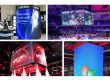
In commercial billboard projects, a 3D LED screen usually means an anamorphic display. A creative team builds a virtual scene around the screen dimensions and renders it from a camera position that matches the intended audience. Perspective, shadows, occlusion, and a virtual frame suggest depth. The light still comes from the display surface; an object does not physically float over the street.
A corner or curved 3D LED screen gives the animation connected surfaces to work with. A flat LED wall can also show a perspective illusion, but the content must be designed for it. The effect normally becomes less convincing away from the planned viewpoint. A panel’s wide viewing-angle specification describes visibility, not the area in which the illusion stays geometrically correct.
02. Distinguish billboard 3D from other display technologies
An anamorphic 3D LED screen differs from an autostereoscopic monitor, which uses optical structures to deliver different views, and from stereoscopic systems requiring glasses. Holographic fan displays are another product category with different safety, scale, and image characteristics. Ask suppliers which technology they propose before comparing prices.
The phrase “3D LED wall panels” also needs clarification. Panels form the physical canvas; they do not automatically turn ordinary video into convincing 3D. For more background, see EagerLED’s explanation of naked-eye 3D display technology. This buying guide focuses on turning that concept into a practical business installation.
2. Why Use a 3D LED Screen for Your Business?
A 3D LED screen can give a product launch or branded location a distinctive visual moment. Whether that attention produces value depends on audience quality, dwell time, creative execution, and the next action you want people to take. A compelling animation alone does not establish higher sales or a predictable payback period.
| Application | Main priority | Evidence to request |
|---|---|---|
| Outdoor retail facade | Visible corner, daylight contrast, safe public viewing | Site sightline study and day/night content demonstration |
| Shopping mall or showroom | Close-range detail and comfortable brightness | Full-size sample showing fine detail at the nearest normal position |
| Corporate lobby or experience center | Quiet operation, finish quality, reliable scheduling | Service-access drawing and content-management demonstration |
| Exhibition or product launch | Repeatable assembly and camera performance | Rigging plan, assembly test, and recording under event settings |
| Media-owner billboard | Uptime, advertiser workflow, content replacement | Support commitments, proof-of-play process, and commercial operating plan |
For corporate 3D LED displays, separate an experiential entrance feature from a presentation screen. A perspective animation can suit brand storytelling, while spreadsheets and small meeting-room text require legibility across many seats. A single installation can run both kinds of content, but each needs its own acceptance test.
Define a measurable outcome before buying a 3D LED screen: qualified inquiries, campaign-code redemptions, attributable store visits, or booked advertising inventory. Compare equivalent periods and record other promotions. Social video views and physical visits are different measures; neither should be treated automatically as incremental revenue.

3. Indoor and Outdoor 3D LED Display Examples
Outdoor billboards and indoor corporate displays need different hardware. The following EagerLED product examples illustrate those differences; they are product references, not claims of completed installations or independently verified campaign results.
| Product example | Manufacturer-listed format | Project checks |
|---|---|---|
| EA3D-VR outdoor 3D LED display | Customizable 90-degree curved cabinet arrangement, front and rear service, IP66 cabinet protection | Daylight visibility, corner drawing, structural loads, weather exposure, access, and content mapping |
| EA3DiP1 indoor 3D LED poster display | Four-sided 680 × 680 × 1,920 mm cabinet; P1.25, P1.56, or P1.86; 600 cd/m² brightness; front-service modules and caster wheels | Closest viewing distance, floor loading, safe pedestrian clearance, content perspective for each approach, and power routing |
EA3DiP1’s four-sided visibility means visitors can see its screens from several directions. It does not mean an anamorphic animation remains geometrically correct from every position. For a corporate lobby, mall, or exhibition, test the illusion from each intended audience zone and test ordinary branding and text across the wider floor plan.
For either format, request a storyboard that includes the screen outline and viewing position. Different aspect ratios, curves, resolutions, and audience positions may require separate renders. Agree on test files, revisions, usage rights, and future adaptations before approving creative production. Confirm all product specifications in the model-specific written offer.
4. How to Choose the Best 3D LED Screen: Specifications and Price
01. Survey the audience and calculate the pixel canvas
Begin with measured width, height, mounting elevation, corner angle or radius, and the nearest important viewer. Photograph the proposed 3D LED screen location from actual approach routes. Trees, street furniture, glare, and nearby signs can matter more than another increment of resolution. Mark where people can comfortably stop without obstructing circulation.
Pixel pitch is the center-to-center spacing between pixels, expressed in millimeters. Smaller pitch increases pixel density and can improve detail at close range, but adds cost and processing demand. Choose using actual artwork and viewing distance, rather than treating a simple distance-to-pitch rule as an acceptance standard.
Resolution calculation: approximate horizontal pixels equal screen width in millimeters divided by pitch in millimeters. An illustrative 8,000 mm wide face at P4 has about 2,000 horizontal pixels; a 4,000 mm height provides about 1,000 pixels. Final cabinet increments determine the real matrix. A processor accepting 4K input does not make that face a native 4K display.
02. Specify the complete 3D LED screen system
| Item | Specify in the quotation | How to verify |
|---|---|---|
| Geometry | Face dimensions, radius or corner angle, joint detail | Approved drawing and full corner assembly demonstration |
| Pitch and resolution | Exact pitch and total native pixel map | Actual creative displayed at the closest important viewing point |
| Brightness and color | Calibrated luminance, dimming range, uniformity | Daylight and low-brightness tests across both faces |
| Refresh and playback | LED refresh, video frame rate, scan configuration | Moving scene and camera test at intended recording settings |
| Control system | Pixel capacity, mapping, synchronization, accepted formats | Playback across the seam, restart, and recovery tests |
| Outdoor enclosure | Applicable front/rear protection and operating conditions | Model-specific reports plus drainage and cable-entry review |
| Service | Access direction, clearance, spares, calibration files | Demonstrated replacement of module, power supply, and receiving card |
Brightness in nits is equivalent to cd/m². An outdoor 3D LED screen needs adequate contrast under its real sunlight conditions and controlled dimming after dark. More brightness is not always better: excessive output increases discomfort and can waste energy. Verify performance after calibration, with the intended color temperature and normal content.
LED refresh rate and video frame rate measure different processes. Neither a high refresh number nor a “4K compatible” label alone guarantees smooth, camera-clean motion. Request the full signal path, processor limits, and a test with the proposed brightness and camera shutter settings. Synchronization across the corner is especially important.
For a 3D LED screen outdoor installation, inspect protection as a complete assembly. Cabinet ratings do not automatically cover exposed connectors, an unsuitable cable route, or poor drainage. Confirm temperature limits, ventilation, corrosion exposure, and the service environment. Use EagerLED’s module and advertising-screen selection guide for additional component checks.
03. Plan the content before ordering hardware
A useful 3D LED screen content brief includes a surveyed screen model, virtual camera location, native output canvas, frame rate, codec, and delivery color settings. Agree on animation duration, number of revisions, source-file ownership, music licensing if applicable, and future adaptation rights. A downloaded demonstration video is not proof that a new installation will deliver the same illusion.
Require a low-cost geometry test before approving the final animation. A simple virtual box, grid, and moving object can expose mapping or viewpoint problems early. After installation, check both the main audience position and the wider circulation area. Retain a conventional 2D fallback playlist for situations in which the perspective sequence is unsuitable.
04. Build a complete 3D LED screen price comparison
There is no reliable single price for an unspecified 3D LED screen. Area, pitch, cabinet geometry, control equipment, installation conditions, and animation scope change the total. A per-square-meter hardware quote, a turnkey installation quote, and a monthly advertising booking are different purchases. Request itemized proposals for the same project brief.
| Budget line | Include | Common missing item |
|---|---|---|
| Display package | Modules, cabinets, shaped sections, control, cables, spares | Corner pieces or enough controller capacity |
| Site delivery | Freight, agreed taxes, lifting, structural and electrical work | Access equipment and local installation labor |
| Creative production | Survey, modeling, animation, mapping, revisions, usage rights | Extra versions for different screens |
| Commissioning | Calibration, content tests, training, documentation | On-site adjustment after the first playback |
| Operation | Electricity, software, connectivity, cleaning, content refreshes | Maintenance access and out-of-warranty labor |
Use measured typical power for running costs and maximum demand for electrical design. As an illustration, a 40 m² screen averaging 250 W/m² draws 10 kW. At 10 operating hours per day, it uses 100 kWh; a hypothetical $0.15/kWh tariff gives $15 per day. These are calculation assumptions, not an EA3D-VR specification or a quotation, and exclude auxiliary equipment.
Compare ownership over your intended operating period: installed cost plus energy, service, software, content, and eventual replacement. If the business only needs a short campaign, compare booking an existing 3D LED screen with buying one. Include media placement and creative adaptation when evaluating that alternative.

5. Common Mistakes to Avoid When Buying a 3D LED Screen
Choosing from a promotional video alone. A recording may show only the ideal viewpoint. Ask for unedited footage and inspect the geometry in person or through a site-specific mock-up. The best 3D LED screen demonstration uses your planned dimensions and audience position.
Buying finer pitch without a visible benefit. Extra pixels may add little to a distant viewer while increasing the budget. Compare two suitable pitches using the smallest important graphic or text. Keep essential calls to action readable outside the 3D sweet spot.
Assuming the lowest hardware quote is the lowest project cost. Missing structure, commissioning, or animation can reverse the comparison. Record exclusions and responsibility boundaries before accepting any 3D LED screen proposal.
Treating lifetime as a warranty. An LED lifetime figure usually relates to a stated light-output condition. It does not mean the complete system will avoid failures for that duration. Review component coverage, labor, access charges, repair turnaround, and available spares separately.
Leaving maintenance until after installation. A screen that cannot be accessed efficiently can turn a small component failure into a lengthy outage. Require a service demonstration and confirm who holds configuration backups. Do not assume all internal components are accessible simply because the modules are front-serviceable.
6. How to Compare 3D LED Screen Suppliers
01. Compare evidence rather than a generic brand ranking
A defensible shortlist compares exact proposed models, not a list of famous manufacturers. Ask each 3D LED screen supplier to respond to the same site drawings and acceptance criteria. A company’s general reputation does not establish that one particular cabinet or controller suits your corner, maintenance route, and content workflow.
| Decision | Required evidence | Warning sign |
|---|---|---|
| Visual fit | Site-specific mock-up and content test | Only unrelated showroom footage |
| Engineering fit | Cabinet, structure, weight, and service drawings | Unspecified corner construction |
| Commercial scope | Itemized offer with exclusions and milestones | Hardware price presented as full project cost |
| Content delivery | Formats, mapping, rights, revisions, responsible party | No agreement on the final pixel canvas |
| Support | Written warranty, spare list, escalation route | Lifetime claim used instead of service terms |
02. Where EagerLED EA3D-VR fits
EagerLED’s EA3D-VR outdoor 3D LED display is a product family to evaluate for shaped outdoor advertising installations. The product page describes a customizable 90-degree curved cabinet arrangement, front and rear service, and IP66 cabinet protection. These are manufacturer-listed features, not independent test findings or guarantees for every configuration.
When requesting an EA3D-VR 3D LED screen proposal, ask for the exact model, native resolution, brightness, weight, power, applicable protection documentation, and approved corner drawing. Confirm whether animation, local engineering, installation, and after-sales visits are included. A site-specific written offer is more useful than an unsupported claim that one product is best for every business.

7. Installation and Maintenance Tips for a 3D LED Screen
Commercial deployment in four steps
- Survey the site: record audience routes, viewing zones, screen dimensions, mounting height, sunlight, power, and service access.
- Approve geometry and content: obtain the cabinet drawing, native pixel map, and a perspective test rendered for the actual installation.
- Order a defined scope: compare itemized hardware, structure, installation, animation, commissioning, warranty, and operating costs.
- Commission and hand over: test playback, seams, day/night brightness, recovery, and component replacement; give the operator configuration backups and a maintenance plan.
01. Agree on factory and site acceptance
Before shipment, test the assembled 3D LED screen or a representative corner section. Check seams, color matching, low-brightness gradients, pixel faults, module replacement, and playback synchronization. Define acceptable tolerances in the order and record the settings used. Include a power-recovery test and a demonstration of the fallback playlist.
At the installation site, qualified professionals should verify the support structure, electrical supply, isolation, grounding, environmental protection, and applicable local requirements. Repeat visual acceptance from the actual audience positions in daytime and after dark. Do not sign off solely because every cabinet lights up.
02. Make ongoing maintenance practical
Maintain a labeled cabinet map, wiring diagrams, controller configuration, calibration files, and a spare-parts inventory. Train the operator to recognize a failed module, lost data link, or power fault and follow the agreed escalation process. Use approved cleaning methods and keep ventilation paths clear.
Set inspection frequency according to the environment and manufacturer guidance. Outdoor installations may need additional checks after severe weather. Track recurring faults and brightness or color drift. EagerLED’s front-maintenance screen guide explains service-access considerations that also matter for a 3D LED screen mounted near a wall.
8. 3D LED Screen Technology Trends Worth Evaluating
Evaluate new features through a demonstration and a business requirement. Improved dimming, more efficient power design, remote diagnostics, and easier calibration can help operation, but any energy-saving claim needs a comparable brightness level, content pattern, and measurement method. A percentage without those conditions is difficult to use in a budget.
AI-assisted tools may accelerate storyboards or visual development, but final 3D LED screen content still needs accurate geometry, rights clearance, mapping, and on-site review. Real-time interaction adds sensors, software, latency, and support responsibilities. Specify these as separate system requirements instead of assuming an animated display is automatically interactive.
For a business buyer, the useful question is whether a feature reduces operating effort, improves the audience experience, or supports a measurable campaign goal. Favor demonstrated capability over predictions that every future screen will use the same technology.
9. FAQ: Choosing a 3D LED Screen
01. How much does a 3D LED screen cost?
The price depends on area, pitch, cabinet shape, control equipment, site work, and animation. Request hardware, installation, content, and recurring costs separately. A hardware-only price per square meter cannot establish the full installed cost or be compared directly with renting an advertising slot.
02. Does a 3D LED screen need glasses?
An anamorphic billboard does not require glasses. Its content creates a perspective illusion for a planned viewing zone. Other systems marketed as 3D may use different optics or glasses, so confirm the technology and audience requirements in the proposal.
03. Can an existing LED wall show 3D content?
It may, if the display geometry, audience position, resolution, brightness, and playback system support the proposed creative. Commission a geometry test first. Playing a video designed for another corner or screen does not guarantee a convincing result on your LED wall.
04. Which pixel pitch is best for a 3D LED screen?
Choose pitch from the closest important viewer, physical dimensions, and required image detail. Compare suitable samples with actual artwork. Finer pitch can help close viewing but is not automatically the best use of the budget for a distant outdoor audience.
05. Are corporate 3D LED displays suitable for indoor spaces?
Yes, when specified for indoor brightness, viewing distance, noise, finish, and service access. A lobby storytelling feature and a presentation wall have different priorities. Test both the perspective sequence and ordinary text content from the intended audience positions.
06. Is an L-shaped screen required?
No. A corner or curve can provide useful surfaces for the illusion, but a flat 3D LED screen can also use perspective-designed content. The animation must match the actual shape and viewing position. Specify the corner angle or radius rather than relying on a generic label.
07. Can I use a free 3D LED screen video download?
Use a downloaded clip only when its license permits the intended use and its geometry, resolution, and format match your system. Demonstration material may be useful for testing, but commercial campaigns usually need site-specific adaptation and explicit usage rights.
08. Can a transparent LED screen display a 3D effect?
A transparent LED screen can play perspective-designed animation, but transparency does not itself create depth. The visible background, ambient light, pixel pitch, geometry, and audience position affect contrast and the illusion. Test the proposed content in the real environment before ordering.
Compare EagerLED’s transparent LED screen options when window visibility is a project requirement.
10. Conclusion: Choose a 3D LED Screen Around Your Business
The best 3D LED screen is the one that passes your site’s visual, operational, and commercial requirements. Start with the audience zone, approve the content geometry, compare complete costs, and test the finished system. Preserve a service plan and a realistic content budget throughout procurement.
To request a useful quotation, send EagerLED site photographs, measured dimensions, mounting height, corner or curve details, viewing distances, operating hours, and your intended campaign. Ask for an itemized 3D LED screen proposal with hardware specifications, animation scope, installation responsibilities, acceptance tests, spares, and warranty terms. That information makes supplier offers easier to compare and the final decision easier to defend.
Send your project brief to EagerLED and request a quotation.