

Quick answer: A transparent LED display is best when a project needs digital content without completely blocking the view, daylight or architecture behind the screen. Its main advantages are partial transparency, strong visual impact, a slim modular structure and flexible installation across retail windows, atriums, showrooms, exhibitions, stages and selected outdoor events. It is not automatically the right LED solution for every venue: pixel pitch, ambient light, protection rating, service access and structural load must match the real installation.
This guide is for retailers, architects, AV integrators, event producers and venue operators who need a practical way to compare the benefits, limitations and best application scenarios of transparent LED displays.
Key takeaways:
- Choose a transparent LED screen when preserving sightlines matters almost as much as image impact.
- Do not judge a screen from transparency alone; image detail, brightness, viewing distance and the background all affect the result.
- Match the product to the environment. An indoor IP33 cabinet and an outdoor IP65 rental cabinet solve different problems.
- For hanging or atrium projects, estimate all suspended mass and point loads, then obtain approval from a qualified structural engineer.
Contents
- What is a transparent LED display?
- Seven advantages of transparent LED displays
- Trade-offs to check before buying
- Best application scenarios
- How to choose for your venue
- Indoor fixed vs outdoor rental examples
- Atrium load and structural planning
- Frequently asked questions
What Is a Transparent LED Display?
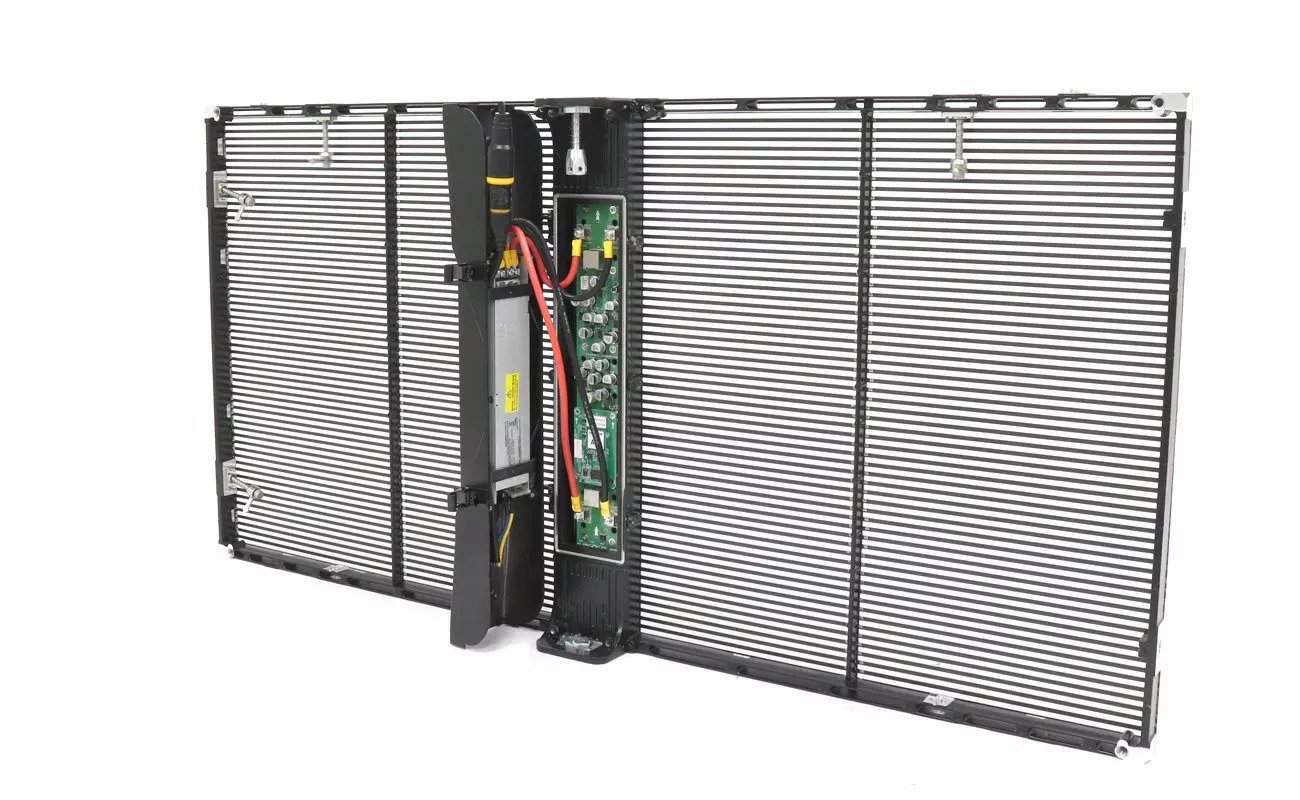
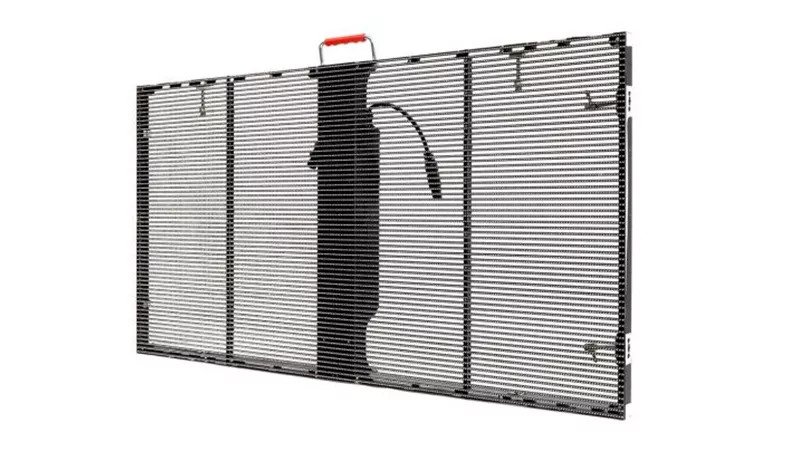
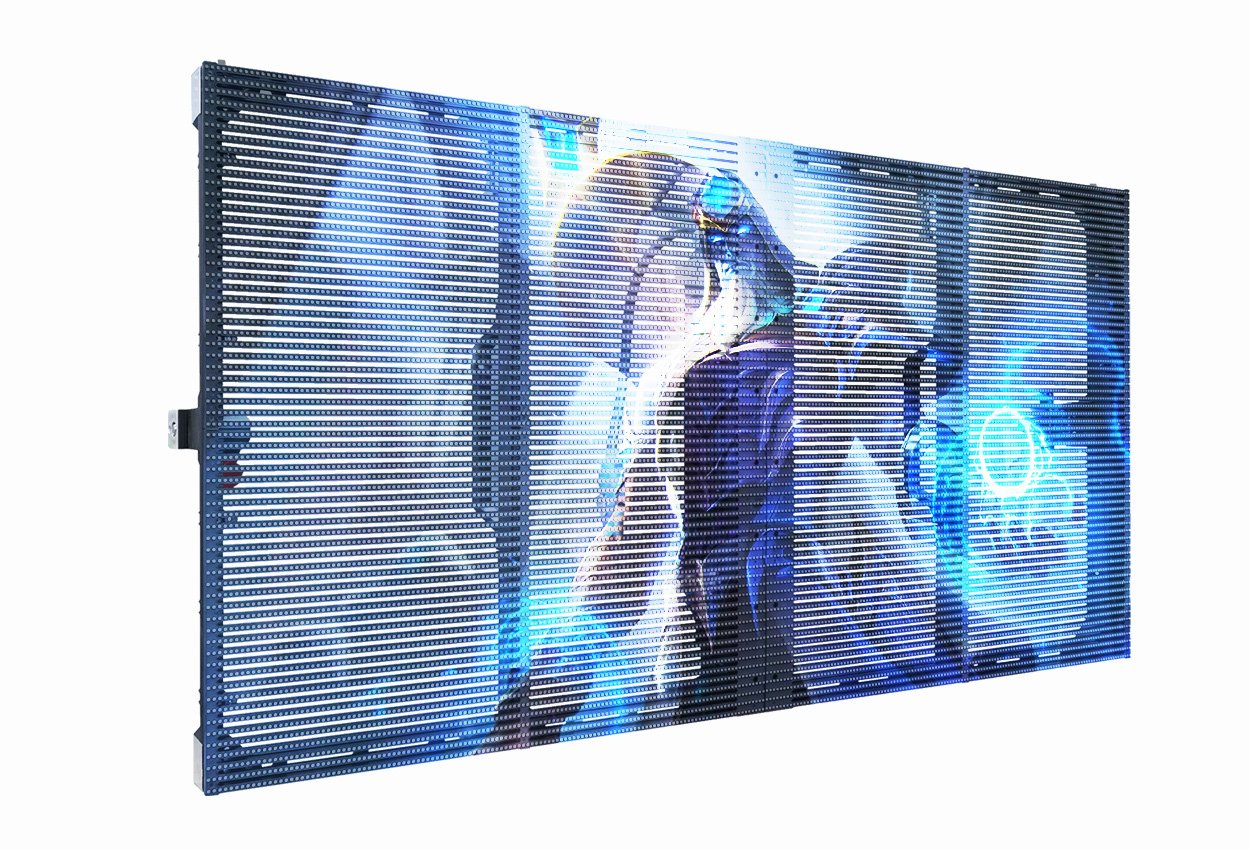
A transparent LED display uses self-emitting LEDs mounted on narrow bars or an open support structure. The spaces between those elements allow part of the background and ambient light to remain visible. Unlike an opaque LED wall, it can place moving content in front of glass, products, performers or architecture without turning the entire surface into a solid visual barrier.
The screen is see-through, not invisible. LED strips, frames, power boxes and cables remain physical objects, and the image still competes with ambient light and the background. The best result comes from balancing transparency with pixel density, brightness, content design and viewing distance.
For a broader explanation of working principles, classifications and purchase planning, see EagerLED’s transparent LED wall guide.
Seven Advantages of Transparent LED Displays
1. They preserve sightlines and part of the daylight
The main benefit is the ability to show digital content while retaining a partial view through the screen. In a shop window, customers can still see merchandise and the store interior. In an atrium or glass-walled venue, the display can attract attention without creating the same solid visual block as a conventional LED wall.
2. They layer content over real products and architecture
Transparent LED content can appear to float in front of a car, display case, stage performer or building interior. This makes the screen part of the spatial design rather than a separate black rectangle. The effect is especially useful when the physical object behind the display must remain visible.
3. Their open structure can reduce cabinet mass and visual bulk
Open LED bars use less solid surface than an opaque cabinet. The actual mass still depends on the model. As a current example, EagerLED publishes a 6.7 kg value for the 1000 x 1000 mm EA1000TiF2 fixed indoor cabinet. That number is useful for early planning, but it is only the cabinet mass; frames, rigging, power equipment and cables must be added separately.
4. Modular formats support predictable screen planning
Cabinet dimensions let designers align the finished screen with glass bays, columns or stage geometry. Fixed installations can use larger formats for efficient coverage, while rental systems often use smaller cabinets and locks that support repeated assembly or creative shapes.
5. Maintenance can be planned around the venue
Some fixed products provide rear-access maintenance, while other systems are designed for front service or repeated rental handling. Choosing the correct access direction before fabrication avoids a common failure: a light, attractive display that technicians cannot safely reach after the glazing, ceiling or interior finishes are complete.
6. Current products offer high-brightness and camera-ready options
Brightness and refresh rate are model-specific. EagerLED’s current EA1000TiF2 fixed indoor page publishes brightness up to 5,000 cd/m2 and a refresh rate of at least 3,840 Hz; its EA500TOR1 outdoor rental page publishes 4,500 cd/m2 and at least 3,840 Hz. These values show why the exact SKU and scan configuration must be checked instead of relying on a generic industry range.
7. Indoor, outdoor, flat and shaped options serve different creative goals
Transparent LED is not one product category with one specification. Fixed indoor systems suit retail glass and commercial interiors. Outdoor rental systems add weather protection, compact cabinets and curve locks. Film products prioritize minimal obstruction on glass, while rigid cabinets prioritize modular structure and serviceability.
Trade-Offs to Check Before Buying
The same open structure that creates transparency also introduces design compromises. A useful specification review should make those compromises explicit.
- Transparency vs image detail: Wider spacing leaves more open area but reduces pixel density. Tighter spacing supports closer viewing and finer content but can obstruct more of the background.
- Ambient light vs contrast: A bright storefront or glass curtain wall can wash out dark content. Measure the light at the actual glass and test representative content before approving brightness.
- Background vs readability: Busy merchandise, daylight and reflections can compete with text. Transparent LED content usually performs better with bold graphics, high contrast and fewer small details.
- Protection rating vs environment: An indoor rating does not approve a cabinet for exposed weather. The International Electrotechnical Commission explains that IP ratings grade an enclosure’s resistance to dust and liquids; both digits must be read for the quoted model.
- Low cabinet mass vs total installed load: The screen is only one part of the suspended system. Structural frames, hanging bars, power boxes, control equipment, cables and secondary safety devices also contribute load.
- Transparency vs energy claims: Do not assume every transparent display uses less energy than every opaque screen. Compare the published average and maximum power for the exact configuration and operating brightness.
Best Transparent LED Display Application Scenarios
| Scenario | Main goal | Selection priority | Common mistake |
|---|---|---|---|
| Retail windows | Promote products while preserving the view into the store | Minimum viewing distance, glass reflections, off-state appearance and service access | Using small text that disappears against merchandise or daylight |
| Shopping-mall atriums | Create a large visual landmark without closing the open space | Suspended load, point-load map, maintenance route, fire and venue approvals | Estimating only cabinet mass or dividing load equally across anchors without engineering proof |
| Showrooms and museums | Overlay information or motion graphics without hiding the physical exhibit | Content contrast, visitor distance, viewing angle and controlled brightness | Letting bright content overpower the object being presented |
| Glass walls and commercial interiors | Integrate signage with architecture and retained daylight | Cabinet alignment with glazing, cable routes, rear clearance and interior finish coordination | Finalizing glass or ceilings before confirming the service path |
| Exhibitions and brand activations | Build a layered, lightweight-looking visual feature | Fast assembly, transport protection, controller layout and repeatable calibration | Choosing a fixed-installation product for a frequently rebuilt booth |
| Stages and rental events | Keep performers, lighting and scenic layers visible behind video content | Refresh rate, camera tests, rigging, wind exposure and rental-ready locks | Judging camera performance from refresh rate alone without testing shutter and scan settings |
| Outdoor events and temporary facades | Deliver see-through content in changing weather | IP rating, brightness, wind engineering, temperature range and drainage | Assuming an indoor transparent cabinet is suitable because the venue has partial cover |
How to Choose a Transparent LED Display for Your Venue
1. Start with the content and minimum viewing distance
Fine logos, prices and product text need more pixel density than large motion graphics. Review the real content at the nearest expected viewer position. Do not select the smallest pixel-pitch number without also checking transparency and budget.
2. Measure ambient light at the installation surface
A controlled indoor showroom and a sun-facing storefront are different environments. Record light conditions at the glass at relevant times of day, then evaluate the exact model and content at a realistic brightness.
3. Confirm transparency for the quoted SKU
Transparency depends on LED spacing, strip width, cabinet frames, power-box placement and the supplier’s measurement method. Ask for the value on the technical submittal and review an off-state sample against a background similar to the venue.
4. Match the protection rating to real exposure
Use the official IEC explanation of IP ratings to read the two digits correctly. Then confirm whether the quoted rating applies to the front, rear or full cabinet and whether rain, dust, condensation or wash-down can reach the screen.
5. Design power, data and maintenance together
Confirm average and maximum power, circuit layout, controller capacity, cable paths and the maintenance direction before fabrication. Include access for modules, receiving cards and power supplies without conflicting with glazing, doors, sprinklers or customer circulation.
6. Obtain structural and venue approval before installation
For hanging screens, prepare the final cabinet schedule, support structure, rigging, point-load layout and service plan. The responsible engineer must apply the rules for the project jurisdiction and installation type. In the United States, ASCE/SEI 7 is a reference for minimum design loads and related criteria; other jurisdictions use their own codes and approval processes.
Indoor Fixed vs Outdoor Rental: Two Current EagerLED Examples
The table shows why application should drive product selection. These are published planning values checked on August 31, 2026, not universal transparent LED specifications.
| Planning item | EA1000TiF2 fixed indoor | EA500TOR1 outdoor rental |
|---|---|---|
| Best fit | Retail windows, glass walls, showrooms and commercial interiors | Outdoor events, repeated rental use and creative temporary shapes |
| Published cabinet format | 1000 x 1000 mm and 1000 x 500 mm options | 500 x 500 mm |
| Published cabinet mass | 6.7 kg for the 1000 x 1000 mm cabinet | 5.7 kg for the 500 x 500 mm cabinet |
| Published transparency | 60% | 60% |
| Published brightness | Up to 5,000 cd/m2; verify the exact pitch and scan option | 4,500 cd/m2 |
| Published refresh rate | At least 3,840 Hz | At least 3,840 Hz |
| Protection and service | IP33 indoor cabinet with rear-access maintenance | IP65 cabinet with a -10 to +15 degree curve lock |
Data rule: Match every number to the exact model, cabinet size, pixel pitch and scan configuration on the quotation or technical submittal. A category page or marketing headline is not a substitute for the configuration-specific specification table.
Engineering Note: Atrium Load and Structural Planning
An allowable atrium load cannot be calculated from screen area alone. Start with the final cabinet-aligned layout and the verified mass for the exact model. Then add the documented mass of support frames, hanging bars, rigging, power and control equipment, cables, trim, service platforms and secondary safety devices.
Total suspended mass = cabinets + support frame + rigging + power/control equipment + cables + service accessories.
Total mass is still not enough. The engineer needs the number and location of suspension points, the load path, eccentricity, expected movement and maintenance access. Do not divide the total equally among anchors or copy a generic safety factor unless the engineered layout and local rules support it. EagerLED’s dedicated P3.91 transparent LED screen load guide provides a worked cabinet-count and point-load planning method.
Sources and Methodology
- EagerLED EA1000TiF2 fixed indoor transparent LED screen – current indoor cabinet, transparency, brightness, refresh-rate and service data.
- EagerLED EA500TOR1 outdoor rental transparent LED screen – current outdoor cabinet, IP rating, transparency, brightness and curve-lock data.
- International Electrotechnical Commission: IP ratings – interpretation of protection against solids and liquids.
- ASCE/SEI 7 – U.S. reference for minimum design loads and associated criteria.
All product values were checked against the linked public pages on August 31, 2026. They are model-specific planning data and must be confirmed on the signed quotation and technical submittal. Structural, electrical, fire and venue approvals must follow the rules applicable to the project location.
Frequently Asked Questions
What are the main advantages of a transparent LED display?
The main advantages are partial transparency, retained sightlines and daylight, layered content over products or architecture, a slim modular structure and flexible options for fixed, rental, flat or shaped installations. The benefit is strongest when the background must remain visible.
Where are transparent LED displays most effective?
They are most effective in retail windows, shopping-mall atriums, glass-walled commercial interiors, showrooms, exhibitions, stages and selected outdoor events. A conventional LED wall is often better when maximum image contrast matters more than transparency.
What is the trade-off between transparency and image detail?
More open space can improve the view through the screen, but it usually reduces pixel density. Tighter LED spacing can improve detail for close viewing, but the extra LEDs and support structure can block more of the background.
Can a transparent LED display be used outdoors?
Yes, but only when the exact cabinet, IP rating, brightness, temperature range, drainage and structural design suit the exposure. Do not use an indoor transparent cabinet outdoors simply because the installation has partial cover.
How should the load of a transparent LED screen in an atrium be calculated?
Calculate the cabinet count and verified cabinet mass, then add frames, rigging, power and control equipment, cables and service accessories. Map the real suspension points and load path, then obtain approval from a qualified structural engineer under the local code.
Need a project-specific recommendation? Send EagerLED the glass or opening size, installation type, minimum viewing distance, ambient-light condition, content and camera needs, service path, environmental exposure and approved load information. The team can match the venue to a product type and cabinet layout.