

The jumbotron will almost always be the first thing you put your attention towards, whether you are at Times Square, a random stadium, or at your favorite artist’s performance. What is the title of this big screen? It is what replays the dunk, shows the ads, and lets everyone in the cheap seats see it close up. Whether it is a jumbotron screen, jumbotron TV, or the big screen, there is no difference.
All of this started back in the 1980s with Sony’s old Jumbovision. But it disappeared, overweight, foggy, and consumed too much power, but that same concept is still here today. LED video walls and LED display panels are more eco friendly than ever now.
By 2025 you’ll see jumbotrons just about everywhere, inside retail malls, hanging over sports stadiums, blasting content at concert venues, even stuck on massive LED billboards above city streets. People don’t even blink anymore; it’s just part of the background.
We’re talking how a jumbotron screen actually works, what the cost of a jumbotron looks like, whether it’s smarter to buy a jumbotron outright or just keep renting a jumbotron for events, plus the nerdy stuff like pixel pitch and which control systems run the show, Novastar, Colorlight, Brompton, all those.
Table of Contents
1.What is LED Display Resolution?
2.Why is Resolution Important for LED Displays?
3.Common Types of LED Display Resolution
4.Differences Between SD, HD, Full HD, 4K, and 8K
5.How to Calculate LED Display Resolution
6.Factors Affecting LED Screen Resolution
7.How to Choose the Right LED Display Resolution
8.Applications of High-Resolution LED Displays
9.FAQs
10.Conclusion
1.What Is a Jumbotron and How Does It Work?
The first Jumbovision devices, large screen displays, video walls, and all that were introduced by Sony way back in the 1980s. Have you seen a wall made of an array of reused television tubes. They were amazing at the time, but they weighed more than a truck, used too much electricity, and their image could only be described as blocky.
Today, LED modules, small diodes in LED display panels, are now the ones being used in creating today’s generation of jumbotrons, jumbotron screens, LED billboards. Compared to the wasteful LED control systems and Digital signages of history, they are smart, modular, and much easier to handle.
The Components
- LED Modules: each of these are bloc
How does a jumbotron work, exactly?
Think of it like plumbing, your video signal (for example, a live concert video stream) runs into the video wall control system. The processor will scale the image for a proper fit, slice the image into pixel size pieces and send that data, down the pipeline . Wires will carry that data into the cabinet and run to the receiving cards that tell the LED modules individually what pixel should be lit or not. Power supplies keep everything operational and working to prevent shorts. The end result is a smoothly operating moving image big enough to see from several blocks away.
And yes, LED video walls pretty much killed LCD for this application. LCD video walls still have a purpose in control rooms or small confined indoor applications if needed, but outside in the elements, or in stadiums LED is brighter, modular, and easier to service. That’s why you don’t see large LCD billboards in Times Square.
2.Where Jumbotrons Are Used in 2025
So, where can jumbotrons be utilized now? The better question is, where do jumbotrons not go?
2.1 Sports arenas and stadiums
- ks of pixels. If one fails, you simply swap out that block instead of the entire screen.
- Cabinets: metal frames which hold at each block in place and which also holds the power and control cards.
- Power Supplies: keeping the current smooth and constant.
- LED Control Systems: referred to as the ‘brains’ of the operation, Novastar, Colorlight, and Brompton are the brands that dominate the market place, quality controlling and reproducing your mapped content.
- Playback System: what you will be playing your content from either a computer, a live event or a sponsor media server loop.If you have been to an NBA game, or a World Cup qualifier, you know the flow.
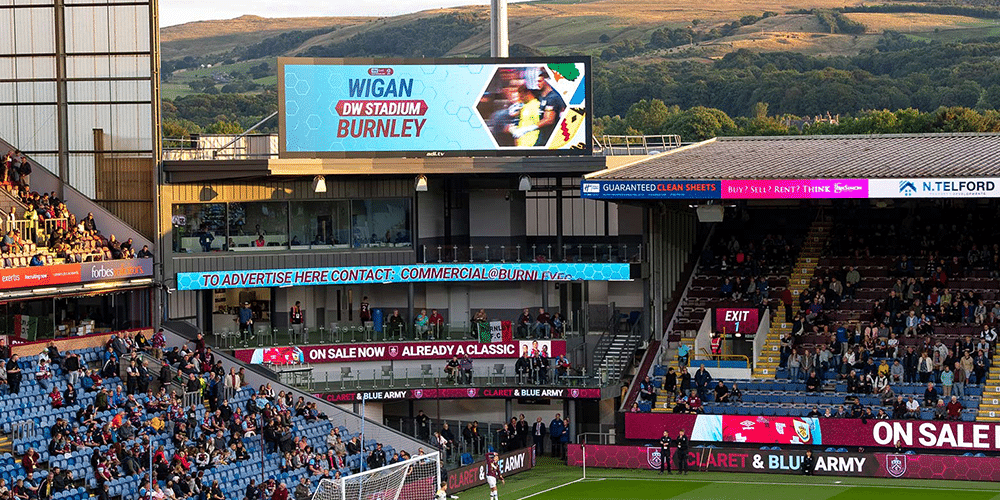
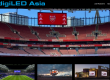
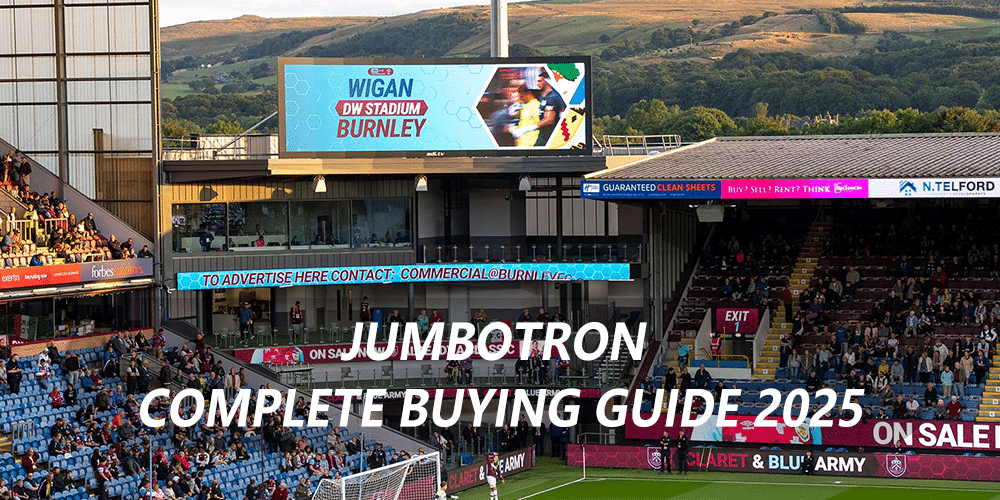
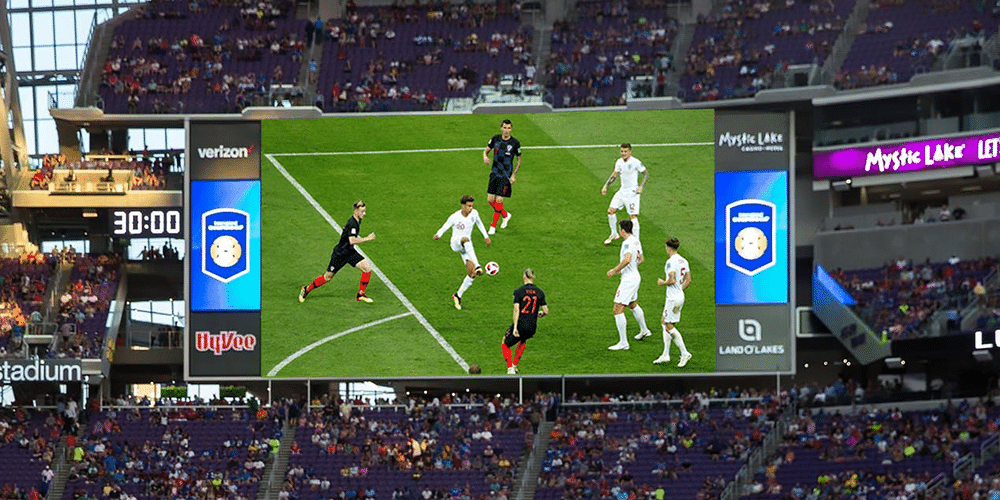
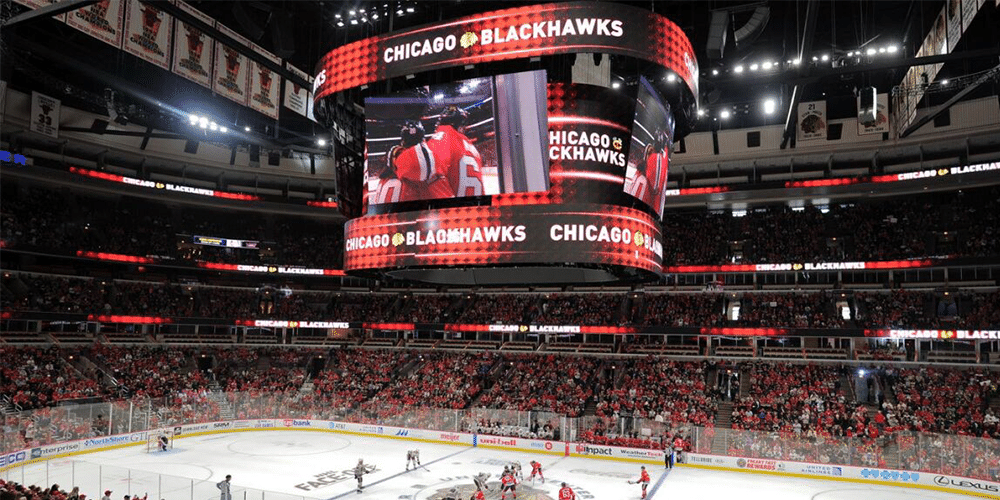
The jumbotron is the star of the show in a stadium, while the game is at commercial break; replays, live stats, fan cams, and the jumbotron is the heartbeat of the arena; without the jumbotron, the fans in the upper deck would be looking through binoculars to see the game.
2.2 Concerts and festivals
If you have been to a music festival, even an up-close seat means the stage is a speck, unless you are in the front row. The jumbotron screen addresses that concern and can provide amazing image magnification, IMAG. For someone seated half a mile back, they can still feel engaged with the music. Additionally, artists will often use it as another visual piece of their show (besides themselves), including synchronized visuals with lights, pyro and even prompting the audience. Touring crews routinely spec Brompton control gear because it provides a better flicker free solution for camera feeds.
2.3 Commercial and advertising signage
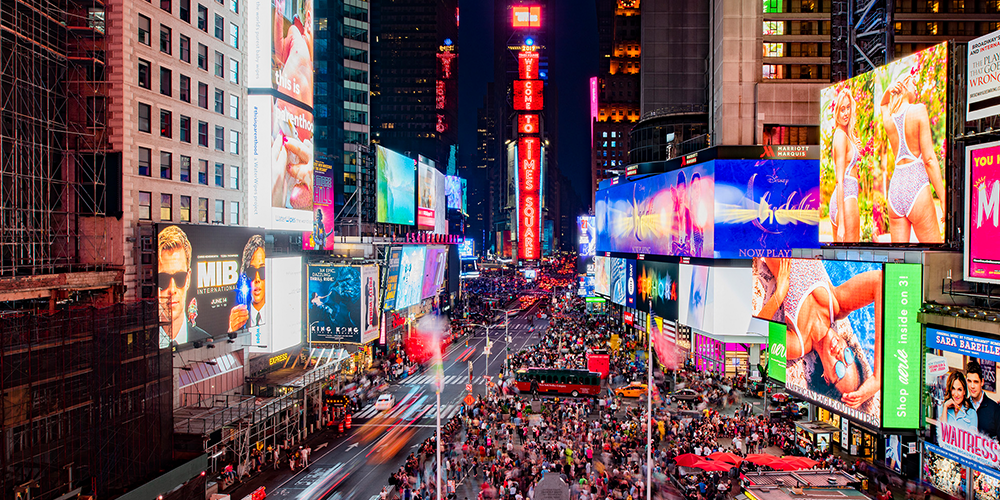
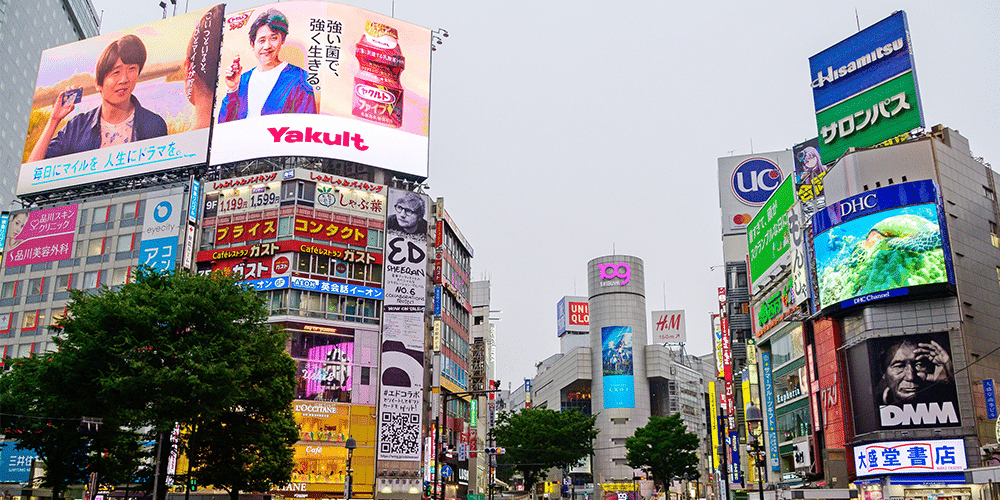
Cities love these. A jumbotron, for example, in a plaza can be used for advertising, and campaigns can rotate, live content or even interactive activations. Shibuya Crossing in Tokyo, Times Square in New York and the Las Vegas Strip are essentially large case studies for jumbotrons and LED billboards.
2.4Corporate, malls and exhibits
Not every jumbotron has to be the size of a house. Malls use them in atriums, expos use them as backdrops for booths and corporations use them for keynote speeches. Even smaller large screen displays can completely change the feel of an event.
3.Purchasing a Jumbotron vs. Leasing a Jumbotron
3.1 When does leasing a jumbotron makes sense?
- One-off or occasional use (annual conference, weekend festival)
- You want a turnkey crew to handle rigging, controlling, and playback of content
- You need short-term use of specialized equipment (curved tiles, transparent LED tiles, or ultra-bright outdoor performance tiles)
Pros of LED rental:
- Lower up front cost
- Professional crew to install, strike, and transport the LED jumbotron
- Rental house carries risk (they have spares, and can swap in an alternate when something goes wrong at show-time)
Cons:
- Rental costs add up across multiple events for jumbotron hire
- Limited options for customization with priority dependent on inventory
- You do not build long-term value into an asset
3.2 When does it make more sense to buy a jumbotron?
- Multi-year, frequently used (sports venue, permanent signage, touring company)
- You want complete control over the video wall control system and the content stack
- You can maintain spares and foundational service capability
Pros of buying a jumbotron:
- Ownership of asset + depreciation as an asset
- Complete customization possibilities (size, pixel pitch, shape)
- Long-term cost per use decreases dramatically
Cons:
- High upfront cost and responsibility to maintain
- Need trained operators and a spares plan
3.3 Rental pricing ranges (very rough estimates):
- Small wall for indoor (stage side screen): $400–$1,500 per day
- Medium concert wall: $2,000–$7,500 per day
- Large outdoor stage wall or city activation: $8,000-25,000+ per day (logistics and labor heavy)
Rule of thumb for long-term ROI: If you’re going to use a jumbotron a ton for 2–3 years straight, consider the option to buy one.
4.What Impacts the Cost of a Jumbotron?
4.1 Price affecting components
- Size (sq. m):More sq. m = more cabinets, power, rigging.
- Resolution & Pixel Pitch: Tighter pixel pitches rules cost more per sq. meter.
- Brightness (nits):True daylight capable walls require higher bin LEDs and more powerful designs.
- Weather Rating (IP):Outdoor cabinets (IP65 on the front) are worth more than indoor ones.
- Video Wall Controls:Entry level controllers command lower prices than superior, more complex systems (Brompton for touring IMAG).
- Rigging & Structures:Frames, mounts, wind load engineering, cranes for installation.
- Installation & Commissioning:Labor, calibration and time to be onsite.
- Content Creation:Templates, lower thirds, sponsorship packages, 3D motion etc.
- Spares & Warranty Consideration: On site spare modules, extra PSUs, and warranties will slow production and significantly add cost, but also decrease the risk of down-time.
Additional costs / potential additional costs to consider:
- Structural steel or re-enforcement on façades or electrical upgrades (dedicated circuits, distribution, UPS).
- Network redundancy and/or fiber runs.
- Content management software licensing.
- Permitting and inspections (signage, cranes, road closures). Operator training and acceptance testing (on site).
5.Key Tech Considerations Before You Buy
5.1 Pixel pitch explained
Pixel pitch (in millimeters) is the center-to-center spacing of LEDs. Smaller number = tighter pitch = more pixels per square meter = higher clarity up close.
Fast rules:
- ≤ 3 mm: Close viewing (under ~5–7 m), premium indoor stages, corporate backdrops.
- 3–5 mm: Mixed indoor uses, arenas with moderate viewing distances.
- 5–10 mm: Large outdoor LED billboards and stadium canvases viewed from far away.
5.2 LED panel resolution by viewing distance
Your wall’s native canvas should match how close people stand. A too-tight pitch wastes budget if viewers are 40 meters away; a too-loose pitch makes type look blocky up close. If in doubt, build a small demo (1–2 cabinets) to test content at real distance.
5.3 Refresh rate, contrast ratio, brightness
- Refresh rate: For camera use, aim 3,000 Hz+ and camera-friendly scan designs to avoid banding and moiré on IMAG.
- Contrast ratio: Mask design and LED quality matter for deep blacks and crisp whites.
- Brightness (nits): Indoor often 800–2,000 nits; outdoor DOOH 5,000–8,000 nits peak. Always include automatic brightness limiting and nighttime schedules for eye comfort.
5.4 Weatherproofing for outdoor use
Look for IP65 front (dust-tight, jet-resistant) and, ideally, at least IP54 back for harsh climates. Consider:
- Drainage pathways and drip edges
- UV-stable mask materials
- Corrosion-resistant fasteners
- Service access without removing the entire wall
6.How to Customize a Jumbotron for Maximum Impact
6.1 Modularity and creative formats
LED’s superpower is shape. Beyond flat rectangles:
- Curved (concave/convex) walls for immersive lobbies
- Cubes and ribbons in arenas
- Vertical totems and narrow ribbons for retail
- Wraparound corners for 3D-style illusions on façades
6.2 Sync with audio, lighting, and live feeds
Tie your LED control system to lighting consoles and timecode:
- Trigger looks that match music cues
- Insert live camera feeds alongside motion graphics
- Use NDI/SDI pipelines from broadcast switchers
6.3 Branding and real-time integrations
- Social media pulls (moderated) for crowd engagement
- Sensors (motion, audio, weather) to change looks dynamically
- Sponsor takeovers with custom frames, countdowns, and “in-game” graphics
6.4 Custom frames, structures, and interaction
- Architectural frames that hide edges and cable paths
- Interactive content (QR codes, audience prompts, floor pressure tiles)
- Transparent LED overlays on glass where appropriate
7.Jumbotron Installation: What to Expect
7.1 Site prep and structural mounting
- Survey & engineering: Verify mounting points, wind loads, seismic requirements, roof/beam limits, and service catwalks or lifts.
- Permits & compliance: Local signage rules, fire code, electrical inspections, and crane permits (outdoor installs often require road coordination).
- Frames and hardware: Precision frames keep cabinets square and flush to avoid visible seams.
7.2 Power and data setup
- Dedicated circuitsand distribution with headroom for peak draw
- UPSon the control rack to ride through short outages
- Redundant network paths(separate switches, preferably diverse routes)
- Proper cable management to avoid interference and stress points
7.3 Control system installation and testing
- Rack-mount processors and playback PCs/servers
- Map the wall in Novastar, Colorlight, or Bromptonsoftware
- Calibrate brightness, grayscale, and color temperature
- Camera tests for flicker/moiré if you’ll run IMAG or broadcast
7.4 Safety, compliance, and maintenance expectations
- Safety inspections, torque checks, lock safety on flown rigs
- Operator training: day/night brightness schedules, emergency shutdowns
- Maintenance plan: cleaning, airflow checks, PSU health, and at least annual recalibration
8.Famous Jumbotron Examples
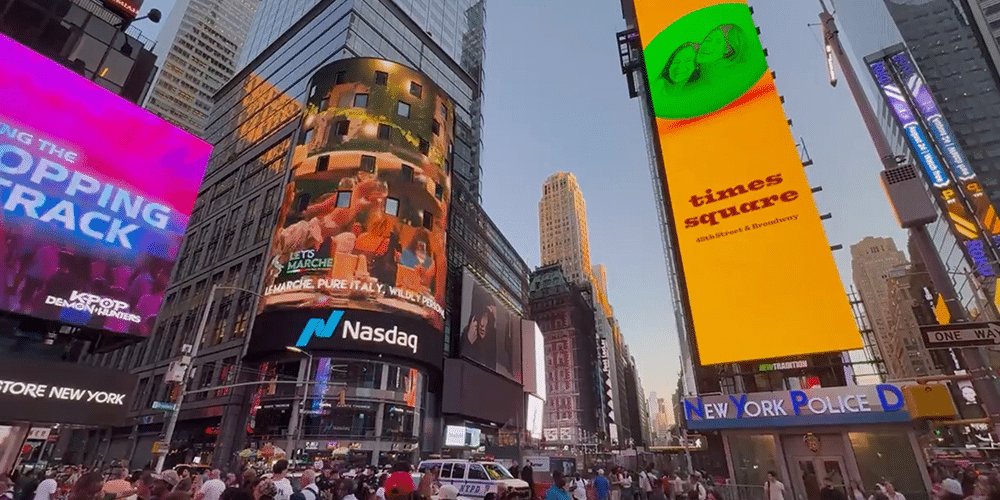
- Times Square, New York– This is essentially the world’s showroom for LED billboards. Every facade demands attention. You’ll see the over-the-top anamorphic advertisements that look like a dragon or cars are about to jump off the wall. Tourists are standing there with phones out, mouths agape, like they are at an amusement park without a cover charge.
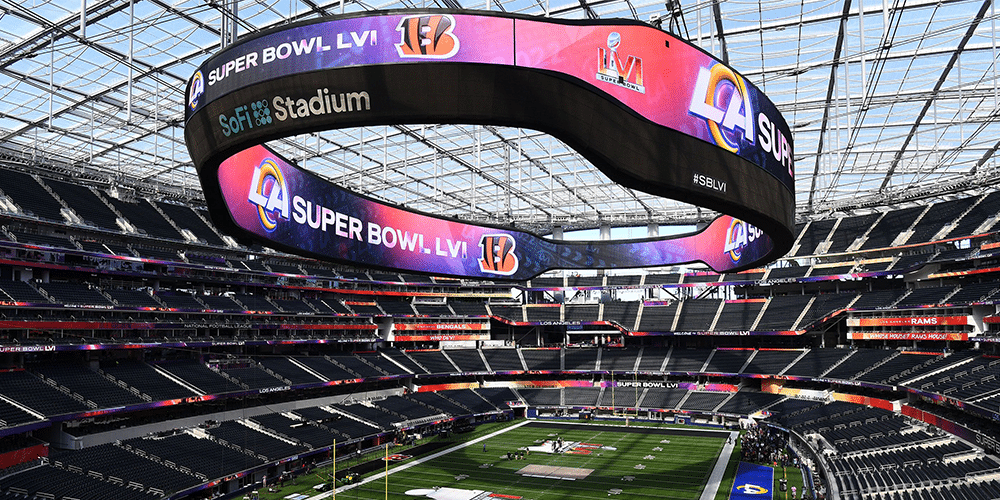
- SoFi Stadium, Los Angeles– Talk about jumbotron in stadiums, then this is certainly the queen of them all. The massive oval board is suspended above the field and is double-sided to face both sides of the seating. Truly feels more like a video game than a football arena.
- Tokyo Dome & Shibuya Crossing– Japan has been doing this for decades. The Dome featured one of the first Jumbovision monsters, and Shibuya nowadays is decked out with high-brightness walls flashing dozens of anime commercials, music videos and interactive advertisements that spread across multiple buildings.
- World expos, Olympics, political rallies– These ideas will always showcase the latest in large screen displays, whether they be live feeds, interactive crowd graphics, and whole buildings wrapped in LED just to showcase what is possible.
9.Where to Source a Jumbotron in 2025
9.1 Leading manufacturers and integrators
The market includes global brands and specialized LED display panels makers. Evaluate by:
- Proven installs in your use case (stadium vs retail vs touring)
- Color uniformity and cabinet fit/finish
- Support quality (spares, RMA turnaround, on-site service options)
9.2 Top control system brands
- Brompton: premium touring/broadcast performance
- Novastar: broad ecosystem for fixed installs and rentals
- Colorlight: flexible, capable mapping with strong value
9.3 OEM vs turnkey solutions
- OEM/direct: Buy cabinets from the manufacturer and assemble your own stack (processor, rigging, playback). Good for advanced teams with integrator partners.
- Turnkey: One integrator delivers design, LED jumbotron installation, control rack, content templates, and training. Higher upfront price, lower risk.
9.4 Local vs China suppliers
- Local/regional integrator: Faster on-site support, easier permitting and warranty handling.
- China OEM/ODM: Lower panel cost and wider pixel pitch variety; plan for freight time, customs, and clearly define who owns on-site service.
- Hybrid: Panels direct from manufacturer + local integrator for structure, commissioning, and service.
10.Jumbotron Questions
Q: How long can a jumbotron be expected to run for?
Think in years, not minutes on a stopwatch. A decent wall built with good LED modules will keep going for ages , usually somewhere between 50k and 100k hours before you really notice the brightness dropping. Translate that into everyday language and you’re looking at five to ten years of daily use, sometimes even longer if you don’t abuse it.
Q: Can it run 24/7?
Yes. If it’s built for it. The big two factors are cooling and power.
Q: Am I able to update content remotely, or do I have to be at the site?
Most set-ups recommend remote updates these days. Most will run with either a CMS or a media server in which you could remotely access through a VPN or some secure link.
11.Conclusion
There are many meanings in the value of experience. In 2025, a Jumbotron is much more than, a “screen”. A Jumbotron is experience amplier; a creator of community that instigates action; a real value installer for sponsors in a sports arena; a connector with artists and fans in concert spots; a digital signage that creates real attention from foot traffic.
If you are calling on jumbotron experience to improve your stadium, looking for a led rental for a concert or campaign, or test effectiveness a video wall control system on a stage at corporate meetings; it is all the same; variables are all the same and good when caring about objectives.