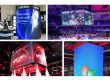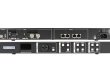


LED display manufacturing turns electronic components into a calibrated, serviceable video wall. A dependable result requires more than bright LEDs: module assembly, cabinet mechanics, power distribution, control electronics, environmental protection, and final testing all have to fit the installation. This guide explains what an LED display manufacturer actually makes, how an LED display factory checks quality, which specifications matter, and what buyers should ask before approving a custom LED video wall.
Quick answer: In a typical direct-view LED display manufacturing workflow, a factory verifies components, mounts devices on printed circuit boards, reflows solder joints, tests modules, builds cabinets, calibrates the complete screen, runs an aging test, and packs the order with matching spare parts. The right production choices depend on indoor or outdoor use, the closest viewing distance, content, installation structure, and service access.
Commercial direct-view LED is self-emissive: the red, green, and blue emitters form the image. It should not be confused with an LCD panel that uses an LED backlight. The distinction matters when comparing an LED video wall with a mini-LED-backlit monitor. EagerLED’s LED display factory describes its module, cabinet, and aging lines; the buying framework below also draws on published engineering guidance and identifies where specifications must be confirmed for a specific model.
1. What LED Display Manufacturing Includes
An LED display factory does not necessarily fabricate semiconductor dies. Most commercial LED display manufacturers source LEDs, driver ICs, printed circuit boards, power supplies, and receiving cards, then integrate and test them as modules and cabinets. Ask a supplier which processes occur in its own facility and which are outsourced. That answer is more useful than an unsupported claim that every component is made in-house.
A video wall is built in layers. The module carries the pixels and driver circuitry. The cabinet holds modules, power supplies, receiving cards, connectors, and alignment hardware. The control system maps an incoming image across cabinets. The installation adds structure, power distribution, data cabling, ventilation, and a service plan. A failure in any layer can affect the screen even when the LEDs themselves are sound.
For procurement, define the required screen width and height, nearest viewer, ambient light, operating hours, mounting method, and location before asking for a quote. An LED display manufacturer can then return a cabinet matrix, native resolution, weight, power demand, and service clearance. These are measurable acceptance criteria; broad labels such as “high definition” or “industrial grade” are not.

2. Main Types of LED Displays and Their Trade-offs
The same LED display manufacturing principles support several formats, but enclosure design and optical priorities change with the application. An indoor fine-pitch wall prioritizes close-viewing detail and low-brightness image quality. An outdoor sign needs suitable ingress protection, daylight brightness, corrosion-aware materials, and safe structural design. A rental screen needs fast rigging and repeated handling. A transparent LED film trades pixel density for visibility through the glass.
| Display type | Typical use | What to verify | Important trade-off |
|---|---|---|---|
| Indoor fixed LED video wall | Boardrooms, retail, control rooms | Pixel pitch, low-gray uniformity, front service, acoustic and thermal fit | Finer pitch raises pixel count and usually cost |
| Outdoor fixed LED display | Billboards, façades, public information | Front/rear IP rating, brightness, wind load, access, power and drainage | High brightness increases heat and electrical demand |
| Rental LED display | Stages, exhibitions, touring | Cabinet locks, weight, corner protection, refresh, spare modules | Fast handling can add mechanical complexity |
| Transparent LED display | Store windows, glass interiors | Transparency, viewing distance, glass mounting, daylight contrast | Open area limits pixel density and image fill |
| Flexible or curved LED display | Columns, sculptural walls, immersive sets | Permitted radius, frame tolerance, module replacement path | Custom shapes complicate structure and service |
Examples on this site include an indoor/outdoor rental LED cabinet, transparent LED film, and a flexible LED display. Compare their model-level data sheets rather than applying one category’s specifications to another. For instance, “outdoor capable” describes a particular protected configuration, not every screen in a series.

3. How the LED Display Manufacturing Process Works
01. Confirm the design and incoming components
Before production, the LED display manufacturer should freeze the approved bill of materials and drawing. Confirm LED package and batch, driver IC, PCB design, cabinet size, service method, power supply, receiver card, and controller compatibility. Incoming inspection should check quantities, labels, visible damage, and relevant electrical or optical characteristics. Consistent LED binning helps avoid obvious color and brightness differences between adjacent modules.
02. Assemble and test LED modules
In common surface-mount LED display manufacturing, solder paste is printed onto the PCB, components are placed by SMT equipment, and the board passes through reflow. Inspection then looks for missing components, bridging, alignment errors, and solder defects. After LEDs are mounted, a lighting test can expose dead or stuck pixels and color-channel faults before the board becomes a complete module. EagerLED describes lamp preparation, PCB SMT, LED SMT, reflow, and light-on testing in its factory production sequence.
Protection depends on the design. Outdoor modules may use coatings, gaskets, or potting to protect electronics from moisture; an indoor fine-pitch module may prioritize surface treatment and close-viewing contrast. There is no universal treatment suitable for every LED screen. Ask how the selected module is protected and how it can be repaired after installation.
03. Build cabinets, map pixels, and calibrate
Technicians mount tested modules in the cabinet, connect power and signal paths, install receiving cards, and check lock and frame alignment. A full screen build reveals seam gaps and color differences that a single-module test cannot. The control system maps each cabinet to the correct position and stores calibration data. Measure flatness and seam consistency with the proposed mounting method; a visually continuous wall depends on mechanics as well as electronics.
04. Age, inspect, and pack the finished screen
Factory aging runs the assembled LED display long enough to expose early failures and intermittent faults under agreed test conditions. Ask for the actual duration, content patterns, ambient conditions, repair log, and final retest, because a number of hours alone does not prove reliability. EagerLED states on its factory page that its modules undergo 24 hours of aging and assembled screens at least 72 hours; buyers should confirm the procedure for their order. Pack modules by batch, label cabinets and cables, and include agreed spare modules, power supplies, and receiving cards.
A useful LED display manufacturing handover contains the approved drawing, electrical load schedule, cabinet map, calibration file, test record, packing list, warranty terms, and service instructions. This makes commissioning faster and gives the installer a baseline if a defect appears later.

4. Specifications That Determine Screen Performance
Pixel pitch is the center-to-center distance between adjacent pixels, measured in millimeters. A smaller pitch places more pixels in the same area. It can improve detail for close viewers but raises pixel count, processing load, and often purchase cost. Viewing-distance rules are planning estimates, not guarantees: content type, eyesight, brightness, and screen size all affect perceived sharpness. Christie and Planar both advise choosing pitch from the actual audience distance rather than chasing the smallest available number.
Resolution example: a 4,000 mm wide screen at 2.5 mm pitch has approximately 1,600 horizontal pixels (4,000 ÷ 2.5), subject to the exact module and cabinet grid. At 1.25 mm pitch the same width has about 3,200 pixels. Ask the LED display factory for the exact cabinet matrix and resulting native resolution so content can be produced at the right dimensions.
| Specification | Why it matters | Question for the manufacturer |
|---|---|---|
| Pixel pitch and native resolution | Sets detail, legibility, and processor mapping | What is the complete wall resolution at the quoted cabinet count? |
| Brightness and adjustment range | Determines readability and comfort in ambient light | At what settings and conditions was brightness measured? |
| Refresh rate and scan design | Affects camera recording and motion artifacts | Can you provide on-camera tests at our frame rates? |
| Color and low-gray performance | Affects gradients and consistent imagery | How are modules calibrated and matching files stored? |
| Average and maximum power | Sizes circuits, distribution, and cooling | What is the peak load for the full installed wall? |
| Ingress protection and temperature | Controls weather suitability | Are front and rear ratings specified separately? |
| Cabinet weight and access | Determines structure and service clearance | Can modules and power boxes be replaced from the front? |
Do not equate refresh rate with video frame rate. A 3,840 Hz LED refresh specification describes how the display drives pixels; it does not mean the input video runs at 3,840 frames per second. Likewise, a quoted maximum brightness is not the normal operating setting. Ask for performance at the brightness level, content format, and camera setup actually planned. A model-level specification page, such as EagerLED’s EA500H9 rental LED display, can show how pitch, protection, refresh, and power differ across variants.

5. LED Display Factory Quality Control and Acceptance
Good LED display manufacturing quality control is staged. Inspection should catch defects while they are still cheap to fix, then verify that corrected parts perform correctly in the final wall. A supplier’s quality-control process is useful background, but the purchase order should state measurable acceptance criteria and evidence for the specific project.
| Stage | Check | Evidence to request |
|---|---|---|
| Incoming material | LED bin, PCB, driver, power-supply identity and condition | Lot traceability and approved bill of materials |
| SMT and module | Solder quality, pixel function, color channels | Inspection and light-on records |
| Cabinet assembly | Flatness, locks, grounding, cabling and service access | Cabinet inspection checklist |
| Full-screen test | Seams, uniformity, mapping, grayscale and signal stability | Full-wall photos or video at agreed settings |
| Environmental test | Water resistance where specified; thermal behavior | Applicable test report for the exact configuration |
| Final aging and packing | Intermittent faults, repairs, spare-part matching | Aging log, retest record and labeled packing list |
Use full white, full black, red, green, blue, grayscale ramps, and moving content during a factory acceptance test. Inspect from the closest expected viewing point and from a camera if the wall will be filmed. Note visible dead pixels, bright pixels, module-to-module tint differences, scan lines, seam steps, and power or data failures. Agree in writing how many defects are acceptable and how repairs will be documented before shipment.
For outdoor LED display manufacturing, a weather rating needs context. Ask whether the published IP value applies to the front, rear, or whole cabinet; verify connectors, cable entry, gaskets, drainage, and maintenance access. The enclosure can fail in practice even if an individual component has a strong rating. Structural engineering, local electrical rules, and site-specific wind and mounting loads remain part of the installation design.

6. Match LED Display Manufacturing Choices to the Application
Searches for an LED display manufacturer often start with a venue rather than a technology. The right response is to translate that venue into measurable constraints. A storefront values daylight readability and scheduled content. A control room values legibility at a short distance and continuous service. A stage values fast assembly, camera behavior, and spares. These priorities lead to different module and cabinet choices even when the wall dimensions match.
| Application | Primary design question | Often overlooked |
|---|---|---|
| Retail and advertising | Can content be read in its real lighting and viewing position? | Reflections, content scheduling, and service access after fit-out |
| Stage and broadcast | Will the screen record cleanly on the intended cameras? | Refresh/scan behavior, color workflow, quick replacement |
| Transport and public information | Is text legible and is downtime managed? | Redundant signal paths, remote monitoring, safe access |
| Corporate and control room | Is fine text readable from the operator position? | Low-gray uniformity, noise, heat, front maintenance |
| Outdoor façade | Does the structure suit wind, weather, and power loads? | Rear access, permits, drainage, site-specific engineering |
For example, a front-maintenance LED screen can reduce the clearance needed behind a fixed wall, but the installer still needs a safe path to remove modules and power units. The cabinet material also affects weight, thermal behavior, and handling; compare the options in EagerLED’s cabinet materials guide.

7. How to Evaluate an LED Display Manufacturer
01. Verify production capability and traceability
Ask to see the LED display factory process that will be used for your order, not only a showroom. Request a sample bill of materials, module lot labeling, production inspection points, and an explanation of any outsourced operations. Consistent records make replacements easier because spare modules can be matched to the original screen. An LED display manufacturer should be able to explain how it handles component substitutions when a part becomes unavailable.
02. Check service, documentation, and warranty
A low quotation can become expensive if a cabinet cannot be serviced in its installed position. Confirm front or rear access, expected replacement time, spare-part quantities, controller backup, training, and response arrangements. Get the warranty’s start date, exclusions, parts terms, and return process in writing. EagerLED publishes a service and warranty overview; the final contract should identify the terms for the selected product and region.
03. Compare like-for-like proposals
Give every LED display manufacturer the same request for quotation: dimensions, pitch target, use, site conditions, cabinet layout, controller requirements, brightness, protection, power, service method, spares, warranty, packaging, and delivery term. Compare the complete installed system, not only the price per square meter. If one bid omits structure, controller, or freight, it is not directly comparable. A sample cabinet or factory acceptance test can resolve uncertainty before a large order is released.
Look for answers that can be verified. “Best quality” is less informative than a measured brightness range, documented aging procedure, batch traceability, or video of the assembled wall at the proposed settings. A reliable LED display manufacturing partner should welcome specific acceptance tests and document any deviation before shipment.

8. LED Display Manufacturing Cost and Total Ownership
LED display manufacturing cost depends on the number of pixels, LED package and driver selection, cabinet material, environmental protection, controller, calibration, and order volume. Fine pitch often costs more because it packs more components into the same area and demands tighter assembly and calibration. Custom shapes, curved structures, or transparent designs can add engineering and production work. Ask for an itemized proposal so each difference has a reason.
Budget beyond factory price. Include structure, electrical distribution, signal transport, installation labor, permits where relevant, freight, tax, training, spare parts, content creation, and recurring energy use. Size electrical circuits for the maximum specified draw, while estimating operating cost from a realistic duty cycle and average draw. The two power figures serve different purposes and should not be swapped.
To compare bids, calculate total cost of ownership over the expected service period: delivered equipment plus installation, energy, maintenance, and likely component replacement. A higher initial price may be justified by easier service or lower energy use, but ask the supplier to show the assumptions. Avoid precise payback claims without your own usage and electricity data.
9. Mini-LED, MicroLED, COB, and the Next Production Choices
Terminology in the LED display industry can be confusing. Direct-view LED video walls commonly use surface-mounted devices (SMD), chip-on-board (COB), or other packaging approaches. COB can protect the emitting surface and support fine pitches, but compare actual repair method, reflectivity, uniformity, and cost rather than assuming every COB product is identical. MicroLED generally refers to very small self-emissive LED pixels and remains more challenging to manufacture at scale.
“Mini-LED” often describes an LCD backlight, although the term is also used in parts of the direct-view LED supply chain. Ask the manufacturer whether a proposed product is self-emissive direct-view LED or an LED-backlit LCD. That single distinction prevents misleading comparisons of contrast, modularity, pixel pitch, and service. Research on mini-LED and microLED describes differing manufacturing architectures, so any claim about future cost or performance should be tied to the exact product design.
The most useful near-term advances for many buyers are less dramatic: better driver efficiency, improved low-gray calibration, more robust surface protection, easier front service, and software that reports cabinet faults. Evaluate such features in a working screen and ask how replacement parts will be supported over its lifetime.

10. Frequently Asked Questions About LED Display Manufacturing
01. What does an LED display manufacturer produce in-house?
It varies. Many LED display manufacturers buy LED packages, PCBs, drivers, power supplies, and control hardware, then perform SMT assembly, module testing, cabinet integration, calibration, aging, and packing. Ask the LED display factory for a process map and identify outsourced steps. The degree of vertical integration alone does not establish quality; traceability and final performance matter more.
02. How is an LED video wall tested before shipment?
A sound LED display manufacturing plan checks incoming parts, solder quality, individual pixels, cabinet mechanics, full-screen uniformity, signal stability, and final aging. Outdoor configurations also need evidence for their environmental design. Request test settings, duration, defect limits, repair records, and a final retest for the exact order.
03. Which pixel pitch should I choose?
Start with the closest viewer, content detail, and wall dimensions. Smaller pitch improves close-viewing detail but increases pixel count and usually cost. Ask the LED display manufacturer for a native resolution calculation and a sample image viewed from the planned position. Published viewing-distance formulas are useful starting points, not a substitute for site review.
04. Is an outdoor LED display waterproof?
Only if its specific enclosure, connectors, and installation are designed for the stated exposure. Check front and rear IP ratings separately, plus cable entry, drainage, thermal design, and service access. An indoor cabinet should not be assumed safe outdoors because it uses a similar LED module.
05. What should be included in an LED display factory quote?
Require the cabinet matrix, total native resolution, model and pitch, brightness, refresh, maximum and average power, environmental rating, controller, spare parts, warranty, packing, delivery term, and installation responsibilities. This makes competing LED display manufacturing proposals comparable and exposes omitted costs early.
06. How long should factory aging take?
There is no one duration that proves every LED screen will be reliable. The useful question is what was operated, for how long, under which patterns and conditions, and how faults were repaired and retested. EagerLED states 24 hours for modules and at least 72 hours for assembled screens on its factory page; confirm the plan for the purchased model.
07. What is the difference between mini-LED and a direct-view LED wall?
A mini-LED LCD normally uses small LEDs behind a liquid-crystal panel as a backlight. A direct-view LED wall makes the image with visible, self-emissive LED pixels in modular cabinets. Product naming can differ, so confirm the display architecture before comparing LED display manufacturing methods or repairability.
11. Conclusion: Buy the Tested System, Not a Label
Effective LED display manufacturing combines appropriate components, controlled module assembly, accurate cabinet integration, calibration, and documented testing. Choose the LED display manufacturer that can translate your viewing distance, content, site conditions, and service needs into a verifiable specification. Ask the LED display factory for the full wall layout, electrical data, sample or acceptance test, traceability, and a practical maintenance plan before shipment. Those details make a custom LED video wall easier to install, operate, and support.
Copy-ready LED display factory RFQ
Send the same brief to every manufacturer so the quotations can be compared on the complete installed system:
Please quote a direct-view LED display for [indoor/outdoor location], [screen width × height], viewed from [closest distance] and operated [hours per day]. State the proposed model, pixel pitch, complete wall resolution and cabinet layout; measured brightness and adjustment range; refresh and camera-test conditions; maximum and typical power; front and rear ingress ratings where relevant; cabinet weight and front/rear service method. Identify the LED, driver, power supply and control system, plus any planned substitutions. Include the factory acceptance test, aging and retest records, calibration files, matched spares, warranty, delivery terms, and all exclusions for structure, installation, freight and permits.
About this guide: The production sequence and aging figures cited above come from EagerLED’s published factory overview. The buying checks are a practical evaluation framework, not test results for every EagerLED model. Verify model-specific specifications and acceptance criteria in the written quotation.
Further technical references: Christie on pixel pitch and viewing distance; Planar’s viewing-distance guide; and the peer-reviewed review of mini-LED and microLED display architectures.