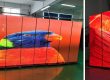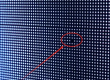


The world of display technology is advancing at breakneck speed, and MiP LED displays are leading the charge. These cutting-edge screens aren’t just another incremental upgrade—they’re redefining what’s possible in image quality, durability, and versatility. By blending the best aspects of traditional LED and micro-LED tech, MiP (Mini LED in Package) delivers stunning color accuracy, eye-popping brightness, and rock-solid reliability.
From retail stores to corporate lobbies, concert venues to trade shows, MiP LED displays adapt effortlessly to any environment. They don’t just show content—they command attention while standing up to heavy use.
So, what makes this technology so special? Let’s break it down.
Table of Contents
1.MiP LED Displays Demystified
2.How MiP LEDs Are Born: The Manufacturing Process
3.History of MiP LED Display Packaging Technology
4.Advantages of MiP LED Displays
5.Comparison of MiP LED with SMD, COB, and IMD LED Technologies
6.Application of MiP LED display
7.The Future of MiP LED Display
8.In conclusion
1.MiP LED Displays Demystified
Think of MiP LED as the “next-gen” packaging for micro-LEDs. Unlike older methods like SMD (Surface Mount Device) or COB (Chip on Board), MiP encases each tiny LED chip in its own protective shell. This approach offers three big wins:
Pixel-perfect repairability – Swap individual LEDs without replacing entire modules
Military-grade toughness – Better resistance to bumps, humidity, and dust than traditional designs
Crisper details – Enables ultra-high-definition displays with tighter pixel spacing
When these packaged LEDs get mounted onto circuit boards using precision SMT (surface mount technology), you get a display that’s razor-sharp, color-accurate, and built to last.
Why Pros Choose MiP Over Alternatives:
Versus COB: No need for expensive full-module replacements when one pixel fails
Versus SMD: Superior energy efficiency and durability in fine-pitch applications
It’s this balance of performance and practicality that’s making MiP the go-to for high-end digital signage.
2.How MiP LEDs Are Born: The Manufacturing Process
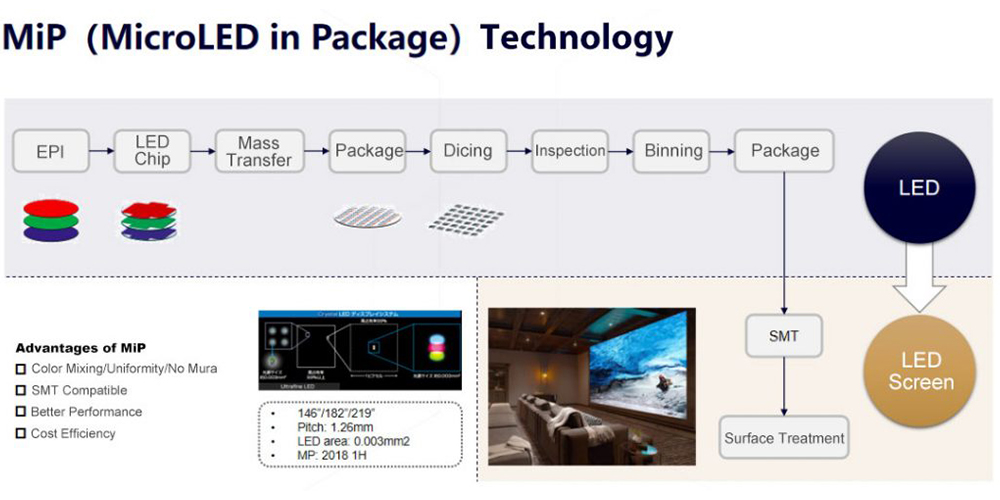
2.1 Material selection
High-quality Mini LED chips are selected as the core light-emitting components to ensure that brightness, color and lifespan meet high industry standards.
2.2 Chip Packaging
Utilizing advanced packaging technology, the Mini LED chip is precisely bonded to an independent packaging carrier, achieving high protection and stable heat dissipation.
2.3 Cutting
The packaged Mini LED panels are precisely cut into small units to ensure the integrity of the circuit and structure, providing a stable foundation for subsequent assembly.
2.4 Testing and Grading
The cut LED units are tested for brightness, chromaticity, and electrical properties, defective products are removed, and they are graded according to color consistency and brightness level to ensure the uniformity of the final display screen.
2.5 Device Forming
The graded LED units are then repackaged to form MIP LED packaged devices with consistent color and brightness, and are isolated from the air to prevent oxidation and moisture.
2.6 Module assembly and surface treatment
The MIP LED package device is mounted on the PCB board using SMT technology to form a standard LED module, and surface treatments such as lamination are performed to enhance protection and reliability.
3.History of MiP LED Display Packaging Technology
MiP LED display packaging technology has evolved over the years to keep pace with changing market demands, undergoing several significant technological iterations, from early DIP LED technology to the groundbreaking SMD LED technology. The advent of SMD LED technology not only significantly reduced the size and weight of LED displays, but also lowered production costs while significantly improving efficiency. Consequently, SMD remained the dominant technology in the LED packaging field for a long time.
However, with the accelerating trend toward higher resolution and finer pixel pitches, traditional SMD LED technology has gradually encountered bottlenecks in achieving smaller pixel pitches. To overcome this limitation, new packaging methods such as COB LEDs and IMD LEDs have emerged, and MIP LED technology has emerged within this context. With its more flexible packaging, enhanced protection, and excellent adaptability to ultra-fine pixel pitches, MiP LED displays are becoming a core packaging solution for the next generation of high-end displays.
4.Advantages of MiP LED Displays
As an innovative packaging technology for Micro LED, the MiP LED Display seamlessly integrates LED chips with discrete components, unlocking new possibilities and delivering significant advantages for next-generation Micro LED display solutions.
4.1 Superior Visual Performance
Through comprehensive measurement, color classification, and mixing of Micro RGB pixels, the MiP LED Display delivers exceptional brightness, contrast, and color consistency across different viewing angles, ensuring a more vivid, accurate, and immersive visual experience.
4.2 Reduced Maintenance
MiP-based MCOB modules feature uniform ink color and excellent optical characteristics, minimizing the need for frequent calibration. If a defective LED is detected, it can be easily removed and replaced without affecting the rest of the screen, significantly reducing the overall maintenance workload of a MiP LED Display.
4.3 Broad Compatibility
The MiP LED Display supports large-scale mass production while lowering wafer costs. Unlike traditional COB technology, which imposes strict requirements on Mini LED chips and increases upstream expenses for binning and sorting, MiP LED Display technology offers stronger compatibility and adaptability to diverse production environments.
4.4 Lower Manufacturing Costs
First, the MiP LED Display packaging process is compatible with existing production equipment, reducing the need for additional investment in machinery and R\&D. Moreover, it decreases defective product rates and downstream rework, resulting in a significant reduction in overall manufacturing and application costs.
4.5 Enhanced Protection
Thanks to its advanced packaging design, the MiP LED Display provides excellent protection against dust, moisture, and electrostatic discharge, greatly improving durability and reliability for long-term use.
4.6 Optimized Heat Dissipation
The MiP LED Display module adopts an advanced thermal management design that effectively reduces power consumption and operating temperature, ensuring stable and efficient performance during continuous operation.
5.Comparison of MiP LED with SMD, COB, and IMD LED Technologies
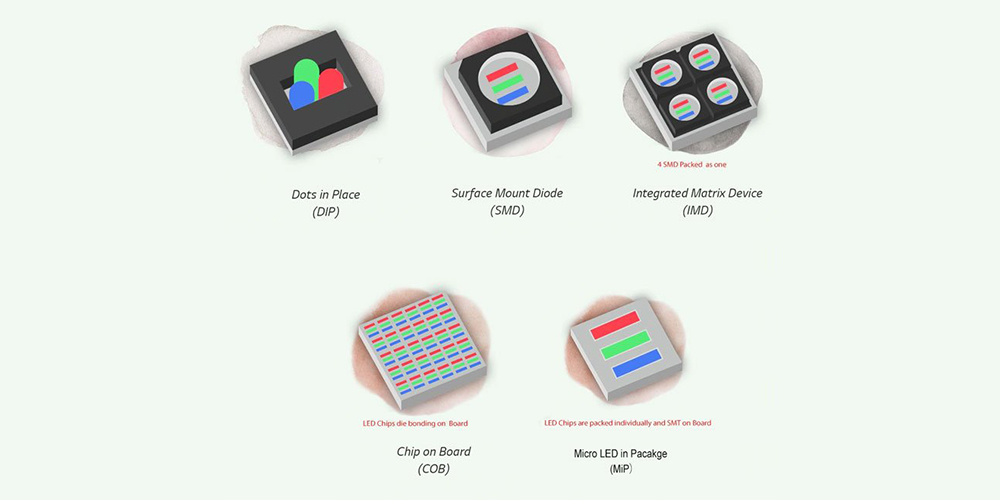
5.1 Comparison between MiP LEDs and SMD LEDs
Pixel density: MiP LED supports smaller pixel pitch, achieving ultra-high-definition display; SMD LED pixel density is limited and it is difficult to meet the requirements of fine pitch.
Color consistency: MiP LEDs achieve higher color uniformity through precise color separation and light mixing; SMD LEDs may exhibit slight color differences when displayed over a large area.
Maintainability: MiP LED modules support independent replacement of individual lamps, making maintenance easy; SMD LED repairs may require replacing the entire module.
Cost and compatibility: MiP LEDs are compatible with existing packaging equipment, reducing defective product rates; SMD LEDs are low-cost but require more calibration work for high-precision displays.
5.2 Comparison between MiP LED and COB LED
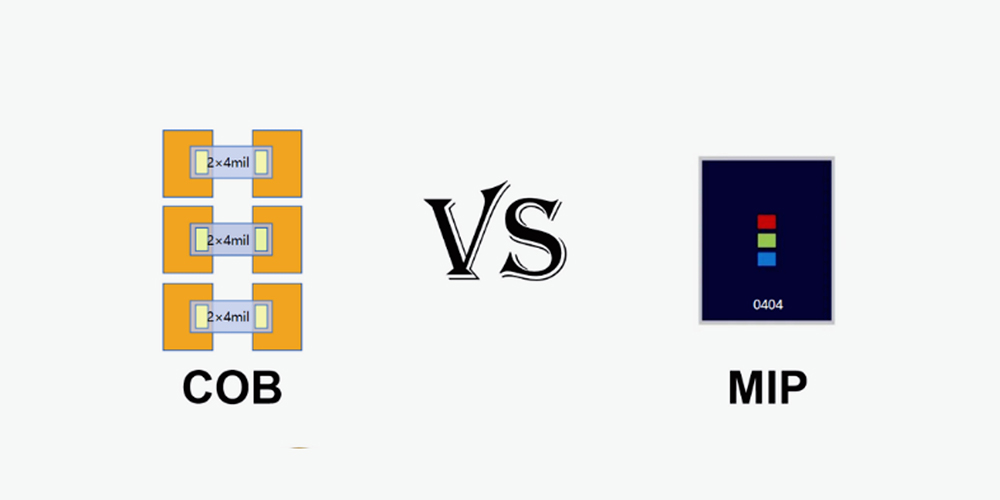
Packaging precision: MiP LED achieves tighter pixel arrangement through high-density packaging; although COB LED has a small pixel pitch, the packaging complexity is high.
Brightness and color: MiP LED has higher color consistency and uniform brightness; COB LED has high brightness but color distribution may be affected by chip deviation.
Maintenance and reliability: MiP LEDs support single-lamp replacement and are highly robust; if a COB LED fails, the entire module may be affected.
Cost efficiency: MiP LED packaging process optimization reduces rework costs; COB LED production has strict requirements on chip light separation and color separation, which is relatively costly.
5.3 Comparison between MiP LEDs and IMD LEDs
Display effect: MiP LED is slightly better than IMD LED in brightness, contrast and color uniformity.
Pixel arrangement: MiP LED pixel arrangement is flexible and can achieve smaller pitch; although IMD LED has high pixel density, the packaging complexity limits its large-scale application.
Maintainability: MiP LEDs are easy to maintain, and replacing a single lamp does not affect other parts; IMD LED repairs may require replacing the entire unit module.
Cost and compatibility: MiP LED reduces defective rate and has stronger compatibility; IMD LED packaging process is complex and requires high equipment and R&D investment.
6.Application of MiP LED display
Currently, MiP LED displays are primarily used in indoor settings. Their extremely small pixel pitch prevents noticeable pixelation even when viewed from close range, providing a delicate and comfortable viewing experience. Even at longer distances, MiP LEDs deliver outstanding visual quality, provided the screen size is large enough and the image quality is clear. Therefore, whether in conference rooms, exhibition halls, shopping malls, or stage backdrops, there are virtually no limitations on the use of MiP LED screens for indoor installations.
However, the high pixel density of MiP LED displays also means they are relatively expensive. For outdoor events requiring large screens, cost and environmental compatibility remain key considerations. This is one reason why MiP LED outdoor applications have yet to gain widespread adoption. However, as the technology matures and costs are optimized, outdoor MiP LED displays may become a key development trend in the next phase of development.
7.The Future of MiP LED Display
Accurately predicting the future trajectory of MiP LED Display over the next few years is not an easy task. However, with the continuous upgrades and maturity of COB packaging technology, the relative advantages of MiP LED Display in terms of performance and cost may gradually diminish, and its price advantage may no longer be as obvious.
Here are some key trends worth noting:
Advantages Derived from Trade-offs: Some of the most significant benefits of MiP LED Display come from a balance between technical features, such as reduced maintenance and inspection requirements. However, these advantages are largely dependent on the current immaturity of mass transfer technology. Once mass transfer technology makes a breakthrough, the competitive landscape for MiP LED packaging could be completely reshaped.
Small-size COB Driving Large-size Development: The successful commercialization of small and medium-sized Micro LED display technologies will accelerate progress in large-size LED module development. This innovation will not only bring new breakthroughs but also drive down COB packaging costs, which may further influence the market positioning of MiP LED Display.
Redefining Market Positioning: In the fine-pitch segment, MiP LED Display may find it difficult to compete directly with COB technology. However, it has strong potential to replace IMD and SMD packaging solutions. With its unique advantages in micro-pitch and small-pitch applications, MiP LED Display is well-positioned to secure a stable share in mid-to-high-end applications, rather than engaging in head-to-head competition with the more expensive COB technology.
8.In conclusion
The MiP LED Display has emerged as an innovative solution that combines advanced packaging technology with high-performance display characteristics, gradually reshaping the visual industry landscape. It demonstrates unique strengths in color consistency, easy maintenance, broad compatibility, and cost efficiency, making it especially suitable for applications that demand exceptional image quality and long-term reliability.
Although future advancements in COB and other packaging technologies may challenge the competitive edge of the MiP LED Display, its flexible market positioning and distinctive technical features will enable it to maintain strong vitality in both fine-pitch and small-pitch display markets. For users seeking ultra-high resolution, stability, and serviceability, the MiP LED Display remains a highly compelling choice.
As the display industry continues to evolve, the application scope of MiP LED Displays will keep expanding—from indoor ultra-HD environments to broader commercial and outdoor markets. For brands and enterprises aiming to stand out in visual communication, seizing the opportunities brought by the MiP LED Display may very well be the key to achieving the next stage of success.