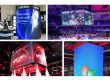


Outdoor LED video walls are modular, direct-view displays built to present moving images, text and live feeds in exposed locations. The right outdoor LED video wall is determined by the closest viewer, daylight conditions, weather exposure, structural load, content format and service access—not by a single claim such as “highest brightness” or “best resolution.” This guide explains how to compare an outdoor LED wall for a permanent billboard, stadium, retail frontage or temporary event, with the calculations and questions a buyer should bring to a supplier.
Quick answer: Start with viewing distance and the physical wall size, then calculate pixel resolution. Check sustained brightness at the intended site, ingress ratings for both front and rear, wind and support engineering, peak electrical load, control redundancy and a realistic maintenance plan. Ask for the exact model’s datasheet and a site-specific drawing before placing an order. The best outdoor LED video wall is the one that meets these site requirements. A demonstration cabinet can look impressive while omitting the constraints that decide whether an outdoor LED video wall succeeds in daily operation.
How to use this guide: The pitch ranges and worked calculations below are planning examples. The product figures cited here come from the linked EagerLED model pages; they are not universal specifications. Confirm the exact variant, installation drawing and local engineering requirements before purchase.
1. What is an outdoor LED video wall?
An outdoor LED video wall joins cabinets containing LED modules, receiving cards and power supplies into one image. Unlike a tiled LCD wall, it has no display bezels cutting through the picture. Unlike projection, the pixels emit their own light, making the system suitable for many bright sites. An outdoor LED video wall is still a complete installation rather than a set of panels: it needs a rated frame, controller, power distribution, data cabling, drainage and a way to reach failed components.
“Outdoor” describes a configuration, not every model in a product family. A rental series may offer indoor and outdoor variants with different LEDs, brightness and ingress protection. Compare the exact SKU, including rear protection, rather than assuming that a front weather seal protects every side. The buyer should also distinguish a permanent sign that runs long hours from a touring wall assembled repeatedly. Their cabinets, connectors, service paths and economics differ.
01. Permanent installation or rental?
A fixed outdoor LED wall favors a structural frame, secure access, automatic brightness control, remote monitoring and long-term spare parts. A rental outdoor LED video wall favors quick locks, handling protection, manageable cabinet weight and rapid front or rear repair during a show. For mixed use, specify the expected duty cycle, setup frequency and site exposure so the supplier can recommend a suitable outdoor cabinet rather than an indoor unit placed under a canopy.

2. Choose pixel pitch and resolution from viewing distance
Pixel pitch is the center-to-center distance between adjacent pixels, expressed in millimeters. A smaller pitch places more pixels into each square meter and usually costs more. It does not automatically improve an outdoor LED video wall watched from far away. Start with the closest normal viewing position and the content: detailed text needs more pixels than a large logo or live event camera feed. The familiar “one meter of viewing distance per millimeter of pitch” is a rough screening rule, not a guarantee of perceived quality.
01. Work through a resolution example
For a 6 m wide by 3 m high outdoor LED wall at P5, the approximate pixel canvas is 6,000 ÷ 5 by 3,000 ÷ 5, or 1,200 × 600 pixels. At P4 it becomes 1,500 × 750 pixels. These are nominal calculations; actual cabinet dimensions and module matrix determine the final canvas. A standard 16:9 video source will need letterboxing, cropping or a differently sized wall if the installed canvas is 2:1. Ask the supplier for a cabinet-by-cabinet plan and the exact output resolution before designing artwork.
02. Match content to the pixel canvas
On an outdoor LED video wall, important text must remain legible from the intended path of travel. Test the smallest intended type, contrast and dwell time on a physical sample or a scaled mock-up at realistic distance. A billboard viewed from moving vehicles calls for concise messages and local sign-rule review; an event IMAG screen calls for camera testing, low latency and suitable refresh settings. Pixel pitch and viewing distance should be evaluated together, not sold as stand-alone specifications.
| Closest typical viewer | Illustrative pitch range | Typical content | What to validate |
|---|---|---|---|
| About 3–5 m | P2.5–P4 | Retail frontage, close camera work | Fine text, glare, higher pixel count and cost |
| About 5–10 m | P4–P6 | Event screens, plazas, stadium concourses | Camera position, audience spread and source aspect ratio |
| Beyond 10 m | P6–P10+ | Large venue signs and distant façades | Minimum type size and sight lines |
These ranges are planning examples, not a promise of readability. Local conditions, eyesight, viewing angle and message design can change the answer.

3. Specify outdoor brightness and image quality
Outdoor LED video walls need enough luminance to remain readable under the site’s actual ambient light. “Nits” and cd/m² describe the same luminance unit. A quoted peak figure may not equal sustained full-screen brightness, and a wall in direct sun has different needs from one beneath a deep overhang. Request the nominal and maximum brightness, measurement conditions, ambient-light sensor behavior and nighttime dimming range for the exact product. High brightness without dimming can cause glare, waste energy and breach local sign rules.
01. Ask for performance you can verify
Judge the outdoor LED wall using actual content in daylight and after dark. Request measured white and color uniformity, calibration method, viewing angles at a stated luminance threshold, grayscale performance at reduced brightness and refresh behavior on the cameras you will use. A “3,840 Hz refresh” claim concerns LED driving, not video frame rate; camera shutter and scan settings still need testing. For live events, confirm processing latency, signal path, failover and whether the controller supports the required inputs.
Product specifications vary. EagerLED’s EA500H9 outdoor rental LED board, for example, lists outdoor variants at 3,000–6,000 cd/m² depending on configuration, with different ratings for the indoor versions. Use the chosen model’s datasheet rather than applying a generic outdoor LED video wall number to all installations.
4. Verify weather protection, cooling and structural safety
Ingress protection uses two digits: the first relates to solid particles and the second to water. Check both faces of an outdoor LED video wall. Some outdoor cabinets specify IP65 at the front and a lower rating at the rear, so an exposed rear may require additional protection. Ask how seams, cable glands, connectors and service doors maintain the specified protection after repeated maintenance. Plan drainage so water does not sit behind the wall or enter through building penetrations.
01. Design for the actual site
Wind load is a project calculation, not a property that can be inferred from “outdoor rated.” A qualified local structural engineer should review the cabinet array, steelwork, anchors, building interface and local design wind conditions. The same applies to suspension, ground stacks and temporary event structures. Check heat from solar exposure, ventilation path, operating temperature, corrosion risk, salt air and access for safe isolation. In coastal or cold regions, request material and thermal details relevant to that location rather than assuming one global specification.
02. Plan for service before installation
Determine whether modules, receiving cards and power supplies can be changed from the front, rear or both. An outdoor LED wall mounted flush to a façade needs front access or a designed service corridor. Document safe working space, lifting method and spare-module storage. For a touring wall, test cabinet swap time and connector durability. A high ingress rating has little practical value if repairs leave seals misaligned or cables exposed.
| Specification | Request from supplier | Why it matters |
|---|---|---|
| Brightness | Nominal and peak cd/m², test conditions, dimming range | Day readability and night comfort |
| Ingress protection | Exact front, rear and connector ratings | Exposure differs by mounting method |
| Structure | Cabinet weight, mounting drawing, wind-load inputs | Local engineer needs verifiable loads |
| Power | Average and maximum W/m², voltage, circuit schedule | Electrical design must handle peak demand |
| Service | Front/rear access, spare parts, warranty terms | Controls downtime and repair cost |
| Control | Canvas resolution, inputs, backup path, remote monitoring | Matches content and continuity needs |

5. Match the outdoor LED wall to its application
“Best outdoor LED video wall” has no useful answer without an application. A digital out-of-home sign, stadium screen and concert backdrop can share LED technology but require different priorities. The table below converts common project types into procurement questions. For a permanent advertisement site, also consult local authorities and property owners about sign placement, luminance, animation, traffic safety and operating hours before choosing a product.
| Application | Primary priority | Often missed |
|---|---|---|
| Retail façade | Close-view pitch and integration with architecture | Window reflections, façade access and nighttime dimming |
| Outdoor advertising | Readable messages and dependable scheduling | Permit rules, network security and proof of play |
| Stadium or arena | Sight lines, control integration and redundancy | Broadcast-camera tests and audience viewing angles |
| Concert or touring event | Fast setup, rigging and serviceability | Wind action, transport damage and backup signal |
| Public information | Legible alerts and uptime | Accessibility, emergency workflow and operator training |
A venue may need several display types. Stadium perimeter displays prioritize impact protection and continuous long-format graphics; the main video board prioritizes viewing distance and live video. For stage design, see EagerLED’s stage LED screen planning guide. For advertising inventory, compare placements in the LED advertising screen guide. Use descriptive links so a reader can predict what each page covers.

6. Calculate power, content and total cost
Budget for the complete outdoor LED video wall system. There is no defensible single price per square meter without a pitch, cabinet model, site and scope. Cabinet price alone excludes steelwork, engineering, lifts, freight, import duties, controller, power distribution, installation, permits, connectivity and future repairs. Request an itemized bill of materials and responsibility matrix. A quote should state whether spare modules, receiving cards, power supplies, calibration and on-site commissioning are included. For a rental outdoor LED wall, add transport cases, rigging, crew and repeat setup time. For a fixed advertising installation, see the outdoor LED billboard cost breakdown and compare quotes on the same installed scope.
01. Size circuits using maximum demand
As a product-based example, EagerLED lists the outdoor EA500H9 rental cabinet at 170–240 W/m² average and 500–720 W/m² maximum, depending on variant. For an 18 m² wall of that series, those figures imply about 3.06–4.32 kW average display draw and 9–12.96 kW maximum display draw (area × stated W/m²). This is a calculation from published model ranges, not a measured site load or a specification for every outdoor wall. Ask for the exact variant’s power schedule. The electrical designer must add controllers, cooling, distribution losses and suitable margin, then split circuits according to the actual equipment and local electrical code. Average operating power helps estimate energy expense; maximum load helps size infrastructure. Brightness schedules and content mix affect actual use.
02. Compare lifetime costs on the same basis
Calculate a realistic operating scenario: scheduled hours per day, expected average power, electricity tariff, annual service visits and a replacement-parts allowance. Ask whether the supplier’s warranty covers labor, freight and access equipment or only components. An outdoor LED video wall that is cheaper to buy can cost more when a crane is needed for each repair. Document controller compatibility and the available replacement-module batch so colors can be recalibrated after a swap.
The content workflow matters too. Assign owners for scheduling, approvals, emergency overrides, file dimensions and access permissions. Match media to the native pixel canvas, allow safe margins and test legibility. A stable outdoor LED video wall with poor content governance will still fail the audience’s needs.
7. Plan installation and commissioning
Before fabrication, confirm wall dimensions in cabinet increments; source resolution; structure and anchor drawings; mains and data routes; network access; drainage; maintenance clearance; and local permit responsibility. A site survey should record the nearest viewer, obstructions, solar orientation and potential reflections. In the US, UK, Netherlands and Belgium, regulations and engineering approvals differ by locality, so the installer must confirm the current requirements for the exact site. Country alone is too broad to determine permit or brightness limits.
01. Perform an acceptance test
At commissioning, inspect cabinets and seals, photograph cable routes, test protective devices, verify grounding and run an all-pixels test. Check brightness control at day and night settings, calibration uniformity, the final canvas mapping, content schedule, remote alerting and recovery after power loss. For a camera-facing outdoor LED video wall, record sample footage with the actual shutter settings. Confirm that a failed power supply or signal cable produces the expected behavior. Keep the approved settings and wiring diagram with the owner.
02. Prepare a maintenance handover
Train operators to identify failed modules, isolate electrical power, clean surfaces according to manufacturer instructions and contact support. Set a schedule for visual inspection, seal checks and cabinet cleaning appropriate to the environment. Record serial numbers and spare inventory. Avoid unsupported promises such as a guaranteed 100,000-hour life: LED aging, brightness setting, temperature and component service all affect real performance.

8. Questions to ask an outdoor LED video wall supplier
Send the supplier a concise brief containing location, photos, wall width and height, closest viewing distance, direct-sun exposure, operating hours, intended content, service side, power availability and target installation date. Ask for two suitable configurations if trade-offs are substantial—for example P4 versus P5—with the pixel canvas and total installed cost shown for each. Request a sample cabinet or documented acceptance criteria when color matching and camera performance are important.
For a rental project, compare transport and assembly as carefully as visual specifications. EagerLED’s EA1000H9 rental LED wall uses 500 × 1000 mm cabinets; a tall cabinet can reduce part count, while smaller cabinets can help fit a complex layout. Confirm compatibility within the chosen series and the outdoor rating of the exact variant. Before buying an outdoor LED video wall, document the selected specification. A defensible decision records why the selected outdoor LED video wall meets the brief, not just which brochure has the highest numbers.
9. Outdoor LED video wall FAQ
01. What pixel pitch is best for an outdoor LED video wall?
Choose from the closest normal viewer and the smallest important detail. P2.5–P4 can suit near-view outdoor work; P4–P6 commonly fits medium-distance applications; more distant, large-format walls can use a coarser pitch. These are starting points. Validate type size, aspect ratio and a real sample before ordering.
02. Is IP65 enough for an outdoor LED wall?
IP65 on the front face may be appropriate for rain exposure, but it does not describe the rear, seams, connectors or building interface. Request ratings for each exposed side and a weather-protection design for the installed configuration. Local climate and maintenance access still matter.
03. How bright should an outdoor LED video wall be?
There is no universal nit target. Direct sun, shade, viewing direction, local rules and nighttime use change the required range. Ask for sustained operating brightness and an automatic dimming plan, then test the proposed model at the site or in comparable conditions.
04. How much power does an outdoor LED video wall use?
Multiply wall area by the exact model’s average W/m² to estimate typical display energy, and by maximum W/m² to start electrical sizing. Add processing and ancillary loads. Content and brightness schedules affect actual consumption; use a local electrical designer for circuit selection.
05. Can an outdoor LED wall be repaired from the front?
Some cabinets support front service; others need rear access, and access may differ between modules and power boxes. Verify each replaceable part, required clearance and how the weather seal is restored after service.
06. What information should I provide to get a useful quote?
Provide dimensions, site address or climate, photos, viewing distance, use case, operating hours, exposure, mounting concept, service access, content sources and timeline. Ask for a cabinet matrix, total resolution, power schedule, structural inputs, warranty exclusions and installed-cost breakdown.
07. How much does an outdoor LED video wall cost?
The installed price depends on screen area, pixel pitch, cabinet type, structure, power distribution, controller, access equipment, permits and freight. A rental quote also depends on duration, crew and rigging. Compare itemized quotes for the same screen specification and included services; a cabinet-only price is not the total project cost.
10. Conclusion: choose the wall that fits the site
A well-specified outdoor LED video wall deserves a documented acceptance test. The strongest outdoor LED video wall proposal connects audience distance, pixel canvas, daylight visibility, weather protection, structure, power and service into one verified design. Compare exact product variants, test the critical content and camera use, and require clear drawings and acceptance criteria. An outdoor LED wall is most valuable when it remains readable, maintainable and compliant through ordinary operation—not only on the day of installation. If you are planning an outdoor LED video wall, use the checklist above to request a configuration and itemized quote for your specific location.