

Budget a dealership’s transparent LED screen from the usable display bays and the complete window installation. The cost depends on active coverage, selected pitch, light conditions, support, rear access and controls. Pricing the entire glass frontage can overstate the hardware quantity while overlooking the work needed to install it.
For Middle East car showrooms, the purchase decision has two visible outcomes: the street-facing campaign must be readable, and the cars behind the glazing must remain part of the presentation. This guide turns that brief into a bay schedule and a comparable quotation scope without inventing price ranges.
- Identify the display rectangle inside each selected glass bay.
- Keep door movement, access routes and service zones in the drawing.
- Mark mullions, supports, power and data routes.
- Record sunlight, showroom lighting and where the cars will stand.
In this dealership budget guide
Define the display area before requesting a rate
Measure each glass bay individually. Provide its width and height, mullion positions, opening sections, obstructions and service space. Distinguish the glazing dimensions from the proposed active LED rectangle. The mounting design and clearances can reduce the usable display area.
Decide which bays carry video and which preserve an unobstructed view of the vehicles. Leave door movement and required access in the site plan; the responsible local team must approve the installation. Do not assume the glass itself can carry cabinet loads or that existing mullions are approved mounting points.
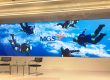
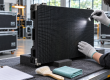
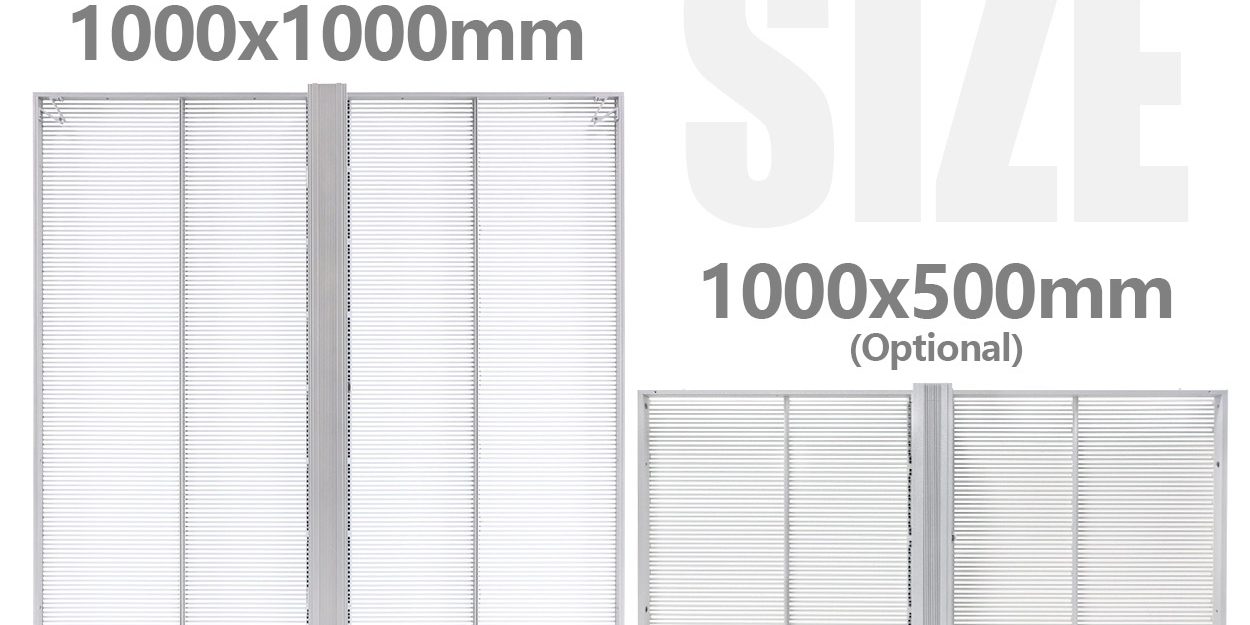
As a product reference, EA1000TiF2 is a fixed indoor transparent screen offered in 1000 × 1000 mm and 1000 × 500 mm cabinet sizes. The published design uses rear access. Confirm the exact size, pitch, configuration and dimensional allowances against the window elevation.
Worked example: three selected display bays
Planning assumptions: three separate proposed active rectangles, each 2.0 m wide × 2.5 m high; upright 1000 × 500 mm cabinets; no display across the doors or gaps between bays. The rectangles are assumed for budgeting and still require a fit and support check.
| Budget quantity | Calculation | Nominal result |
|---|---|---|
| Cabinet columns in each bay | 2.0 m ÷ 1.0 m | 2 columns |
| Cabinet rows in each bay | 2.5 m ÷ 0.5 m | 5 rows |
| Cabinets in each bay | 2 × 5 | 10 cabinets |
| Active area in each bay | 2.0 m × 2.5 m | 5 m² |
| Total active cabinets | 3 bays × 10 | 30 cabinets |
| Total active display area | 3 bays × 5 m² | 15 m² |
The display-hardware subtotal is 30 × the quoted cabinet price, or 15 × a quoted rate per square metre, only if the rate covers the same configuration and included equipment. Add spare cabinets or components as a separate inventory line. Do not add the gaps between bays to the active display area.
A nominal 2.5 m cabinet grid will not fit a 2.4 m usable opening. Resolve the selected size and layout rather than planning to trim a rigid cabinet. If a different format or transparent film is proposed, obtain its own approved module map and service method; cabinet and film dimensions are not interchangeable.
Test the screen with the cars, not only a demo video
The EA1000TiF2 page lists 60% transparency and brightness up to 5000 cd/m². Those product figures do not guarantee the installed view through tinted or reflective glazing. Frames, cables, the showroom background and illuminated content all affect what a visitor sees.
Compare sample content on the proposed pitch from the actual street and pedestrian sightlines. Include a vehicle launch image, the smallest important lettering and a dark-background campaign layout. Show the same sequence with cars in their intended positions and the showroom lights on.
| Condition | What to inspect | Record for approval |
|---|---|---|
| Screen off | Physical obstruction of vehicle silhouettes and sightlines | View from the main outside approaches |
| Bright daytime | Campaign readability through the actual glass | Content, viewing position and brightness setting |
| Evening operation | Comfort, reflections and car visibility behind the screen | Approved dimming setting and showroom lighting |
| Different glass bays | Shade, tint and background differences | Any bay needing a different setting or configuration |
A bright full-screen image can reduce the perceived view of a car. Content with unlit areas can preserve more of the background, but cannot remove the physical LED bars or frame. Review advertising and merchandise visibility together before paying for an entire frontage.
Include support and rear maintenance in the budget
The mounting proposal must show the load path, fixing points, alignment, cable routes and access to the openable rear cover. Keep the required work area clear of parked cars, decorative panels and stored material. A cabinet placed close to glass still needs a practical component-removal route behind it.

Quote the support frame, electrical work, access equipment, installation, commissioning and handover separately from the display surface. Ask the installer to demonstrate how the hardest-to-reach cabinet is serviced. Include compatible spares and configuration backups in the handover.
Facing the street from behind glazing does not make an indoor model an outdoor system. Check temperature in the installation space, direct solar exposure, ventilation and condensation against the selected product’s limits. For an exposed installation, request a specifically suitable configuration and a different support and protection scope.
Decide how the bays play content, then compare full scope
Three independent campaigns and one image spanning three bays need different content and control plans. For independent playback, agree on scheduling and the update workflow. For a shared canvas, obtain synchronized output mapping and an artwork template showing mullions and gaps. A continuous video file should not be stretched blindly across physical interruptions.
Ask each supplier to separate these lines:
- Screen package: cabinet quantities by size, exact pitch, native pixels, power and receiving electronics.
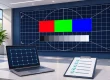
- Control and content: processor or players, software scope, network equipment, schedules and the approved bay map.
- Installation: structure, fixing, cable routing, electrical work, access equipment and commissioning.
- Delivery and readiness: cases or crates, gross weights, named delivery point, spare parts, training and service responsibilities.
Use the same installation city, coverage drawing and delivery scope for every offer. Ask the local logistics and installation teams for current destination costs and required site documentation. Country or region labels do not settle freight, import charges or installation approvals.
For wider product comparisons, read the transparent LED wall guide. The bay schedule here provides the dealership-specific quantity and acceptance basis for an itemized proposal.
Car dealership transparent LED cost FAQ
Should transparent LED screen cost be based on the whole dealership frontage?
Base display hardware on the approved active display rectangles, not automatically on every square metre of frontage. Exclude doors, access zones and unselected glass bays from the active area, then quote supports, cabling and installation separately.
How many 1000 by 500 mm cabinets fit the three-bay example?
For three proposed display rectangles each measuring 2 by 2.5 metres, a nominal grid has two cabinets across and five rows per bay. That is 10 cabinets per bay, 30 cabinets in total and 15 square metres of display. Confirm actual dimensions, clearances and support details before ordering.
Does 60% transparency mean the cars remain equally visible?
No. The published transparency describes the display, while glazing, frames, cabling, showroom lighting, car position and video content affect the installed view. Test the proposed system with the actual cars and lighting, both with the screen off and with daytime and evening content.
Can an indoor transparent LED screen face the street?
An indoor model can face outward from a suitable indoor position, but facing the street does not make it outdoor-rated. Assess sunlight, temperature behind glass, condensation, ventilation and service access. Use a specifically suitable system if the equipment or connections are exposed.
Request a quote for the selected window bays
Send the showroom city, marked window elevation, active rectangles, mullion and door positions, glass photos, viewing distances, sun exposure, rear access and content plan. State whether each bay plays independently or forms part of a shared campaign.
Request separate screen, control, support, spare-part and delivery prices, then add the local installation quotation against the same drawing.
Prepared by EagerLED for showroom project buyers. Product references reviewed on 14 October 2026. The three-bay example is a planning calculation; dimensions, installation suitability, component scope and current prices require confirmation. Product images are manufacturer references, not evidence of a named dealership project.