

What makes one LED display look so sharp while another feels dull? Why does a screen in your living room glow differently from the massive outdoor billboards you see on the streets? And here’s the real question: what type of backlight is used in an LED display?
The answer lies in what type of backlight is used in an LED display? It’s not just about the screen itself. The backlight is like a hidden powerhouse. It decides how bright the picture looks, how deep the blacks are, and even how much electricity the display eats up every month.
Think of it this way: without a good backlight, even the most advanced panel is like a car engine running on weak fuel. Sure, it moves, but it won’t give you the smooth ride you expect.
In this guide, we’ll talk about the different types of backlight used in LED displays i.e. edge-lit, direct-lit, full-array local dimming, and the newer mini-LED. We’ll also peek into the future with microLED, which flips the rules entirely. Along the way, you’ll see their pros, cons, and the situations where each shines best — all to answer the big question: What Type of Backlight Used in LED Display?
1. Understanding Backlighting in LED Displays
So what’s backlighting anyway? It’s basically the lamp hiding behind your screen that makes the picture show up. Without it, you’d just be staring at a dark sheet of glass.
Think of those old photo slides. Hold one in your hand, and it looks flat. Put it in front of a projector, and suddenly the picture comes alive. That’s exactly what a backlight does for an LED display.
Some screens don’t need it. OLED and microLED make their own light, so no extra lamp is required. But regular LED displays with LCD panels do. The crystals can block light but can’t shine on their own, so the backlight steps in.
Ever watched a cheap TV in a dark room and noticed glowing corners? That’s the backlight, and sometimes it doesn’t do a great job.
So the bottom line is this. Backlighting is more than just “light behind the screen.” It comes in different forms, and each one has its own upsides and weak spots. And if you’re curious about What Type of Backlight Used in LED Display?, this guide breaks it down step by step.
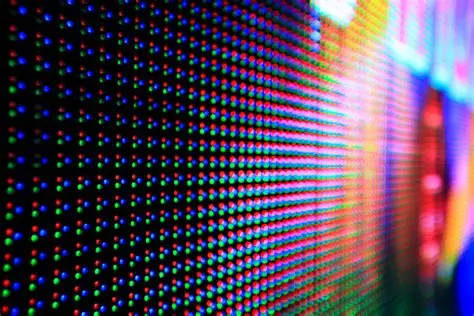
2. Types of Backlighting Used in LED Displays
When people ask what type of backlight is used in an LED display?, the answer isn’t always the same. It could be edge-lit, direct-lit, FALD, mini-LED, or even microLED depending on the setup.
2.1 Edge-Lit LED Backlighting
How it works
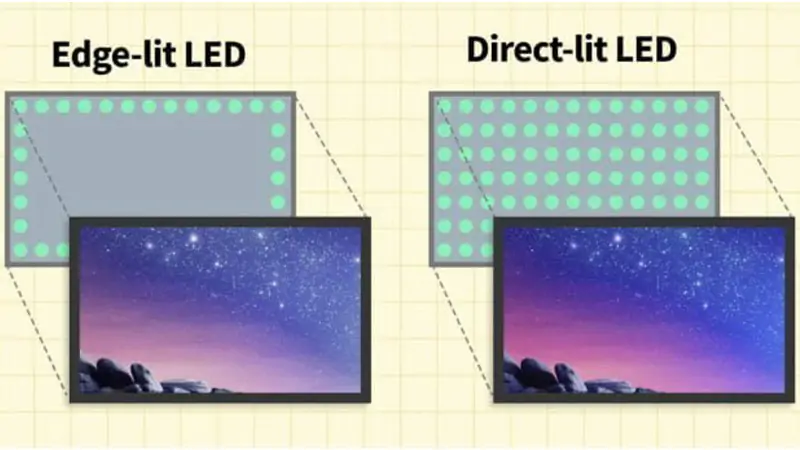
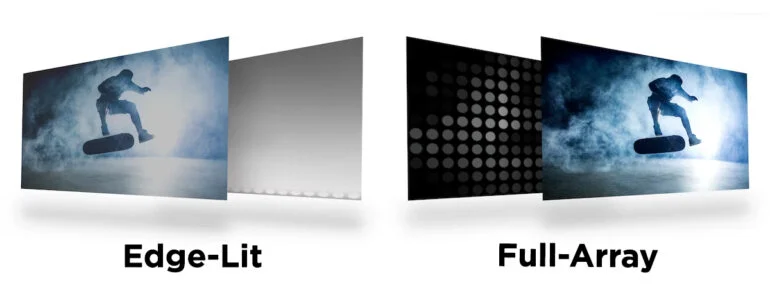
Edge-lit is the simple one. Instead of putting LEDs across the whole back, they just line them up along the sides. Then the light gets pushed across the screen with panels that try to spread it out evenly. Think of it like turning on a few flashlights at the edges of a window and hoping the glow reaches the middle.
Advantages
The cool part? It keeps the screen super thin. That’s why your ultra-slim TV hanging on the wall, or that light laptop on your desk, can look so sleek. It doesn’t need much space for bulky lights in the back. Plus, it’s cheaper to make, which is why budget TVs and monitors often go for edge-lit.
Disadvantages
Here’s where things slip. If you’ve ever watched a movie at night and noticed the corners glowing brighter than the middle, that’s edge-lit showing its weakness. Dark scenes don’t look as sharp, and on big screens the uneven lighting becomes pretty obvious.
Common applications
You’ll see edge-lit tech in a lot of everyday stuff. Slim TVs in living rooms, office monitors, laptops that need to stay light. So if someone asks what type of backlight is used in an LED display like your everyday slim TV or laptop, the answer is usually edge-lit. And this is where people often compare edge lit vs direct lit LED display technology.
2.2 Direct-Lit LED Backlighting
How it works
Direct-lit is a step up from edge-lit. Instead of only putting LEDs along the sides, they’re spread out right behind the screen. Imagine sticking little light bulbs all over the back of the panel so the brightness comes forward more evenly.
Advantages
The big win here is brightness. Direct-lit screens can push out more light, which makes them easier to see in a bright room or even when sunlight hits the screen. The picture also looks more even compared to edge lit. You don’t get those glowing corners or dull spots in the middle. If you’ve ever compared a mid-range TV to a super thin budget one, you can usually spot this difference right away.
Disadvantages
Of course, nothing’s perfect. Direct-lit displays are a bit chunkier. Since the LEDs sit right behind the panel, the screen can’t be made razor-thin like those sleek edge-lit models. For a TV in the living room that might bother some people, but in most cases, the extra thickness isn’t a deal-breaker.
Common applications
You’ll see direct-lit backlighting used in lots of mid-range TVs, store displays, and even digital signage in malls. It’s also common for outdoor LED boards, where brightness matters more than slim looks. So if you’re wondering What Type of Backlight Used in LED Display? for bright malls or outdoor signs, the answer is usually direct-lit.
2.3 Full-Array Local Dimming (FALD)
How it works
Full-array local dimming, or FALD for short, is basically direct-lit backlighting but smarter. Instead of having all the LEDs light up the same way, the screen is broken into zones. Each zone can get brighter or darker on its own.
Think of it like street lights in a city. Some areas need more light, some need less, and each block can be adjusted separately. That’s how FALD works behind your screen.
Advantages
The cool part? You get way better contrast.Dark scenes actually look dark instead of gray. Bright details, like fireworks or headlights, really pop. If you’ve ever watched a Netflix show in HDR on a high-end TV and thought, “Wow, this looks like real life,” chances are FALD was the answer to What Type of Backlight Used in LED Display?
Disadvantages
Now, the downside is pretty obvious that these displays cost more. And if you look closely, especially during really dark scenes, you might notice a slight glow around bright objects. People call that “haloing.” It’s not perfect, but honestly, it still looks miles better than a standard backlight.
Common applications
FALD shows up in premium TVs, gaming monitors, and pro-level displays. Basically, any picture quality has to look amazing. So if someone asks what type of backlight is used in an LED display when it comes to home theaters or gaming setups, FALD is the one.
2.4 Mini-LED Backlighting
How it works
Mini-LED is like FALD but on steroids. Instead of using regular-sized LEDs behind the screen, it uses thousands of tiny ones. Smaller LEDs mean more zones, and more zones mean the backlight can be controlled with crazy precision.
Imagine painting with a fine-tipped brush instead of a big fat marker. That’s the difference mini-LED makes when it comes to lighting up a screen.
Advantages
The first thing you’ll notice is brightness. Mini-LED displays get really bright, which is awesome for HDR movies and gaming. If you’re asking what type of backlight is used in an LED display that needs super brightness and HDR performance, mini-LED is the answer.
Disadvantages
Of course, new tech comes with a price. Mini-LED screens are more expensive, and since it’s still a newer technology, you mostly see it in high-end TVs, monitors, and some fancy tablets. If you’re on a budget, this might not be the one for you yet.
Common applications
You’ll spot mini-LED in premium TVs, Apple’s newer iPads and MacBooks, and gaming monitors built for HDR content. It’s meant for people who want rich color, super bright highlights, and a more “wow” factor without jumping straight to OLED or microLED. So again, if someone asks what type of backlight is used in an LED display for HDR content, the safe bet is mini-LED.
2.5 MicroLED (Next Evolution)
How it works
MicroLED flips the whole backlighting idea on its head. Instead of using a separate backlight, every single pixel is its own light source. So there’s no need for extra lamps sitting behind the screen. Each pixel can turn completely on or off whenever it needs to.
It’s kind of like having millions of tiny flashlights all working together, each one doing its own job. So if anyone asks from you what type of backlight is used in an LED display with microLED, the answer is none. Every pixel is its own light.
Advantages
This setup gives you insane picture quality. Blacks are truly black because the pixels just switch off. Brightness levels go sky-high too, making the screen perfect even in bright rooms. Colors look sharp, the contrast is unbeatable, and it’s super energy-efficient compared to older systems. Honestly, it’s like OLED but without the risk of burn-in.
Disadvantages
Here’s the catch: it’s still crazy expensive. MicroLED is mostly found in luxury displays and commercial setups right now. You won’t casually walk into a store and grab a MicroLED TV for your bedroom just yet. The tech is still new, and scaling it down for everyday consumers is tricky.
Common applications
Right now, MicroLED is used in high-end commercial displays, showroom walls, and super-premium home theater systems. Companies like Samsung have shown off MicroLED TVs at expos, but they cost more than most cars. Whenever someone asks what type of backlight is used in an LED display for the most premium setups, it’s microLED.
3. Choosing the Right Backlight for Your Application
So, what type of backlight is used in an LED display really comes down to where you’ll use it? That’s the big question most people have when looking at the different types of backlight used in LED display setups. Truth is, it depends on where you’ll use the screen and what you care about most. Let’s keep it simple.
3.1 For Indoor Use
If the screen’s going in a living room, office, or classroom, you probably don’t need anything too fancy. Edge-lit backlights or even regular direct-lit LED display backlight types get the job done. They’re slim, lightweight, and easy on the budget. Perfect for a TV on the wall, a laptop, or a monitor for work — often the best backlight for LED display in these smaller setups.
3.2 For Outdoor Use
Now outdoors is a whole different story. Sunlight is brutal, and you need something that can cut through it. This is where direct-lit backlighting shines, literally. It’s brighter and more durable. And if money isn’t an issue? MicroLED is the dream pick. Think giant billboards, stadium screens, or showroom walls. They are bright, bold, and built to last.
3.3 For High-End Visuals
If you’re a movie buff or a gamer chasing that “wow” factor, you’ll want something sharper. Full-array local dimming (FALD) and mini-LED are the sweet spot here. Dark scenes look truly dark, highlights sparkle, and HDR content really comes to life. It’s the kind of setup you’ll see on premium TVs and high-end monitors.
So yeah, when comparing the types of backlighting technology in LED displays, there’s no single “best” one. It just comes down to your space, your budget, and what kind of picture you’re after.
4. Advantages of Modern LED Backlighting
By now, you can tell that figuring out What Type of Backlight Used in LED Display Screen? isn’t only about brightness. It’s also about how long it lasts, how well it handles images, and how sleek the design looks.
4.1 Higher Energy Efficiency
Modern LED backlights are designed to shine bright without burning through power. That means your TV, laptop, or office screen won’t spike the electricity bill. For businesses running dozens of displays all day, or for massive outdoor billboards, this efficiency adds up to serious savings. And it’s not just about the money. It’s also greener, since using less energy means less impact on the environment.
4.2 Longer lifespan
One of the biggest headaches with older backlighting systems was how quickly they wore out. Colors faded, brightness dropped, and repairs weren’t cheap. With today’s advanced backlighting technology in LED display panels, you don’t have to worry about that nearly as much. LEDs are tougher and last longer, so whether it’s a home theater setup or a commercial display in a shopping mall, you can expect years of solid performance.
4.3 Better image and brightness control
This is where things get really fun. Back in the day, one weak spot in the backlight could ruin the whole picture. Modern backlighting technology spreads light more evenly across the screen. On top of that, advanced setups like FALD and mini-LED can control brightness in really small zones.
Watching a movie? The stars in the night sky sparkle while the background stays dark. Playing a game? Explosions pop without washing out the darker parts of the scene.
4.4 Thinner and more flexible designs
Even with all these improvements, LED backlights have also gotten smaller and easier to work with. That’s why you see super thin TVs and sleek monitors that still pump out great visuals. Some mini-LED setups even allow for curved or ultra-wide screens, which used to be a lot harder to pull off.
So yeah, modern backlighting isn’t just “light behind the screen” anymore. It’s what makes your late-night Netflix marathon look crisp, your gaming monitor feel alive, and those giant LED billboards shine like daylight and it’s the reason people keep asking What Type of Backlight Used in LED Display?
5. FAQs
1. Does an LED display have a backlight?
Most do. Without it, you wouldn’t see anything on the screen. The only ones that skip a backlight are OLED and microLED because their pixels glow on their own.
2. What are the different types of LED backlights?
You’ll mostly hear about edge-lit, direct-lit, full-array local dimming (FALD), and mini-LED. MicroLED is the odd one out since it doesn’t need a backlight at all.
3. Which type of backlight does an OLED TV use?
None. That’s the beauty of OLED, that each pixel makes its own light. That’s why those TVs look so thin and have such deep blacks.
4. What are the 4 main types of lighting?
If we’re talking about your room, it’s ambient, task, accent, and decorative. But in the world of displays, the “big four” are edge-lit, direct-lit, FALD, and mini-LED.
5. How much backlight is good for a TV?
There isn’t a one-size-fits-all answer. In a dark room, too much backlight makes the picture look washed out, so turn it down. In a bright room, crank it up so the screen doesn’t look dull. Play around until it feels right for you.
11. Summary
We’ve looked at what type of backlight is used in an LED display, and it’s clear each type has its place. Edge lit is slim, budget friendly, and is the best backlight for LED display in smaller spaces. It works well for TVs, laptops, or office screens where style and price matter more than perfect picture quality. Direct-lit is brighter and more even, which makes it great for classrooms, stores, or outdoor signs that need to stand out.
If you’re into movies, gaming, or just want that extra “wow,” full-array local dimming and mini-LED are where it’s at. They give you deeper blacks, brighter highlights, and an overall better picture. And then there’s microLED, the really fancy one. It looks incredible, but right now it’s mostly for big budgets and commercial use.
So what’s the best one? Honestly, it depends on what you need. Want something sleek and affordable? Go edge-lit. Need outdoor brightness? Direct-lit or microLED. Want top-tier picture quality at home? Go for FALD or mini-LED.
And hey, if you’re still scratching your head about what type of backlight is used in an LED video wall?, and which backlight works best for your setup, no worries. Just reach out and we’ll help you figure it out.