

LED display boards show text, images, and video using an array of light-emitting pixels. Rental LED displays are modular screens designed for repeated assembly, transport, and use at events. The right choice depends on viewing distance, content, operating conditions, service access, and how often the screen will move.
This guide helps event organizers, AV rental companies, integrators, and venue buyers compare permanent installations with temporary screens. It explains specifications, budget planning, local delivery considerations, and the information needed for a useful quotation. EagerLED manufactures rental-grade systems for purchase; hiring a complete screen and operating crew for a local event is a separate service to arrange with an AV provider.
1. What Is an LED Display Board?
An LED display board is a direct-view electronic screen: its LEDs generate the visible image rather than illuminating a separate LCD panel. Small modules fit into cabinets, and cabinets join to create the required screen area. A controller maps incoming content to the physical pixels. Power supplies, receiving cards, cables, mounting hardware, and software complete the system.
“LED screen display board” can describe a simple message sign or a full-color video wall. Specify which one you need before comparing prices. A text-only sign, an indoor presentation wall, and an outdoor advertising screen have different resolution, brightness, processing, and maintenance requirements.
01. The specifications that determine image quality
Pixel pitch is the distance between adjacent pixel centers, measured in millimeters. A smaller pitch provides more pixels within the same area. Brightness, expressed in nits, must suit the ambient light. Refresh rate describes how often the LEDs are driven; it is different from the video’s frame rate. Calibration helps neighboring modules reproduce consistent brightness and color.
LED display boards should be assessed with real content at the intended viewing distance. A vivid demonstration video can conceal unreadable spreadsheet text, weak dark tones, or visible module seams. Test the material your audience will actually see.

2. Applications of LED Display Boards
Permanent LED display boards suit locations where content changes regularly but the screen stays in place. Retailers use them for promotions, transport operators for passenger information, and venues for schedules or sponsor messages. Corporate spaces may need detailed presentations, while sports facilities prioritize sightlines, motion, and dependable operation.
Each application changes the specification. A shop window needs evaluation under daytime reflections. A reception display needs comfortable brightness and quiet operation. A roadside installation needs readable messages at a distance and a placement review by the relevant local authority. Public information systems also need a responsible content owner and a fallback message when live data becomes unavailable.
For LED display boards in permanent structures, decide how technicians will reach modules and power supplies before finalizing the wall design. Front service can help where rear space is limited, but the installation still needs appropriate ventilation and safe working access. The commercial display buyer’s checklist covers longer-term installation questions.
3. What Are Rental LED Displays?
Rental LED displays use cabinets intended for frequent handling and reconfiguration. Quick locks, alignment features, protective corners, and transport cases can reduce handling time and damage. These features support a repeatable workflow; they do not eliminate the need for trained technicians or an engineered support structure.
The term has two buying meanings. An organizer may hire rental LED displays for several days, including installation and operation. An AV company may buy the same class of equipment to build a rental fleet. Ask whether the quotation is for equipment ownership, dry hire without crew, or a managed event package.
| Decision | Fixed LED display boards | Rental LED displays |
|---|---|---|
| Operating pattern | Remain in one installation | Travel between events or temporary locations |
| Mechanical priority | Permanent mounting and service access | Repeated handling, alignment, locks, and packing |
| Budget boundary | Screen, structure, installation, and lifetime support | Hire package, or fleet purchase plus operating costs |
| Support responsibility | Owner and contracted service team | Rental provider or fleet operator, as contracted |
| Best initial question | How will this site operate and maintain the screen? | How will each show transport, build, operate, and remove it? |
Some rental cabinets can support a permanent project, but compatibility must be confirmed. Outdoor suitability, structural attachments, duty cycle, and service conditions remain product-specific. Browse EagerLED’s event and touring cabinet range for equipment options.

4. Applications of Rental LED Displays
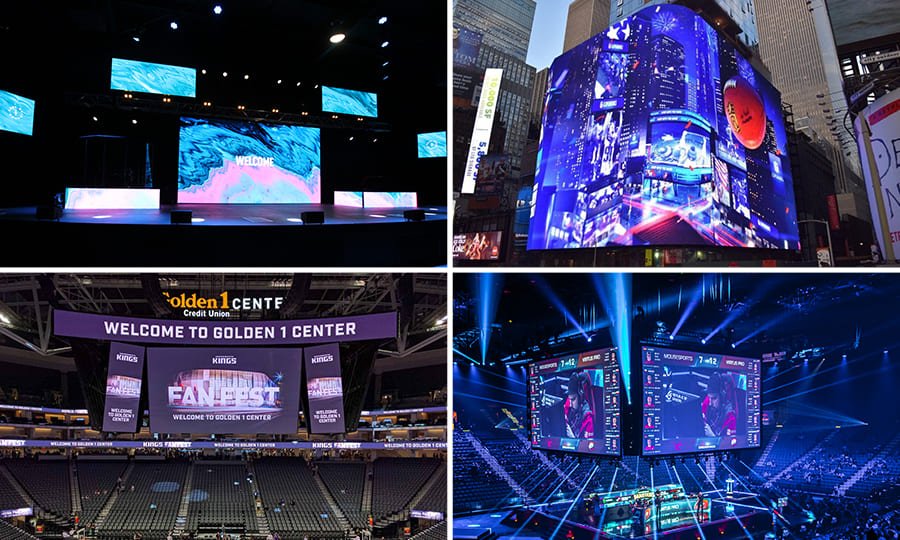
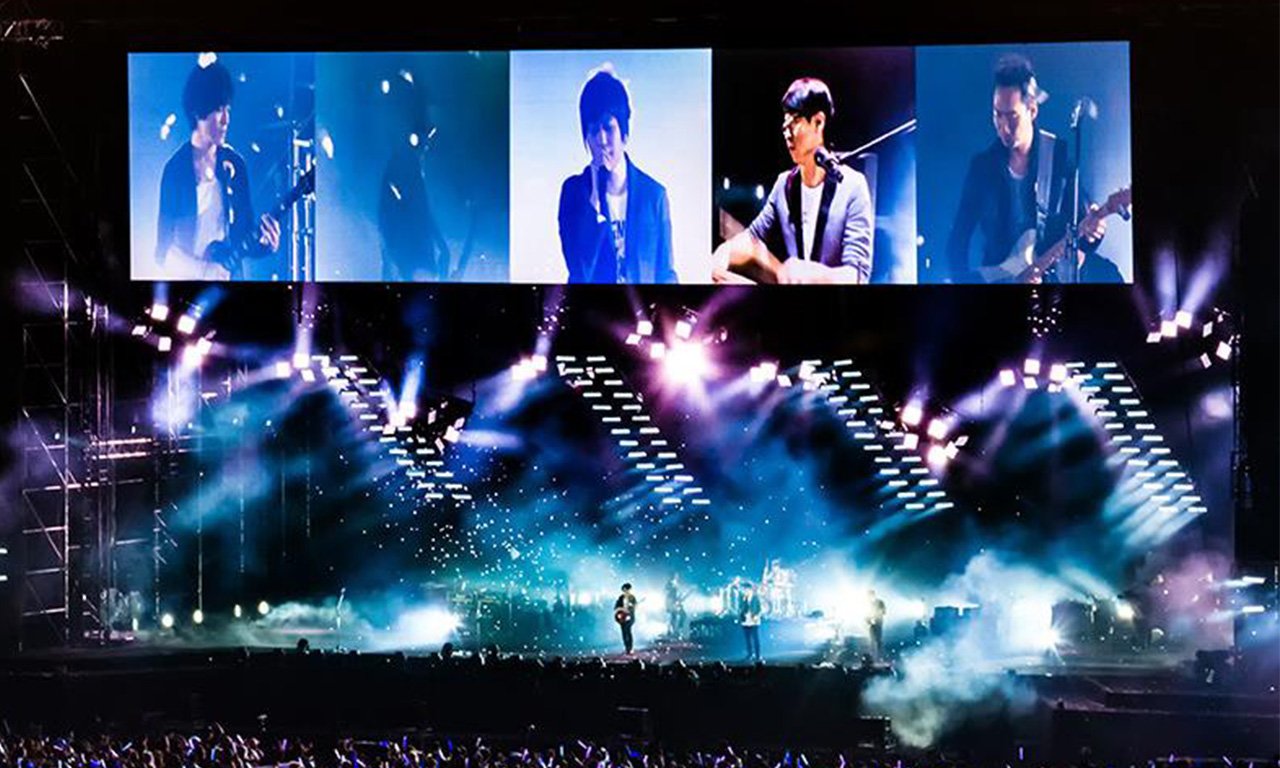
Rental LED displays serve conferences, exhibitions, concerts, product launches, weddings, and temporary sports screenings. A conference wall must make slides readable from the back row. A concert screen may prioritize live camera feeds and visibility across a large audience. An exhibition booth often needs finer detail because visitors stand close to it.
For an outdoor event, evaluate sunlight direction at show time, weather exposure, and access for the support structure. For an indoor venue, check doorway dimensions, loading schedules, floor capacity, and restrictions on suspended equipment. Audience capacity alone does not determine screen size: viewing angles and the smallest text matter too.
Rental LED displays also need an agreed content workflow. Assign responsibility for final media files, switching between sources, presenter laptops, audio synchronization, and backup playback. Rehearse transitions rather than checking only that the screen turns on. For production details, use the stage setup, safety, and spare-panel guide.
5. Benefits of LED Display Boards
LED display boards offer a continuous canvas that can be configured beyond standard television sizes. Operators can schedule messages, display live sources, and adapt layouts for different audiences. Outdoor models can provide useful brightness in bright environments, while indoor models can deliver fine detail at shorter distances.
Those advantages depend on the complete design. Excessive brightness can make an indoor screen uncomfortable. An unnecessarily fine pitch can increase cost without helping a distant audience. LED display boards are serviceable systems, not maintenance-free products: spare parts, calibration, and access affect long-term value.
01. Advantages of rental LED displays
For occasional events, hiring rental LED displays avoids owning equipment that would otherwise sit unused. For rental businesses, reusable cabinets support different screen layouts across a schedule of shows. Standardizing compatible processors, cables, cases, and spare modules can simplify operation. Confirm compatibility rather than assuming cabinets with identical dimensions will work together.
02. How to select the right LED display board
Start with a written brief covering content, nearest and farthest viewers, screen dimensions, ambient light, mounting, and expected operating hours. Then compare proposals against that brief. The lowest panel price is not necessarily the lowest installed cost, particularly when structure, electrical work, software, and service access are excluded.
6. How to Select the Best Rental LED Display
01. Match pixel pitch, screen size, and content
For rental LED displays, choose pitch after reviewing the nearest viewers and the detail they must read. Pitch-based viewing-distance rules are rough starting points, not acceptance criteria. Fonts, eyesight, contrast, content, and screen size all influence the result. Ask for a demonstration at the planned distance before committing.
| Item | What to request | How to verify |
|---|---|---|
| Resolution | Cabinet pixel dimensions and complete screen pixel map | Show the smallest text at actual viewing distance |
| Brightness | Rated output and useful dimming range | Test under expected ambient light |
| Camera performance | Processor, refresh settings, and synchronization options | Test the actual camera, frame rate, and shutter settings |
| Environment | Front/rear protection ratings and operating limits | Review model documentation and the complete installation |
| Service | Access method and compatible spares | Demonstrate a module replacement and recalibration |
| Power and structure | Maximum load, weight, approved hardware, and drawings | Have qualified site specialists review the proposed system |
Resolution calculation: screen width in millimeters divided by pixel pitch gives an approximate horizontal pixel count. For example, a nominal 4,000 mm-wide wall at 2.5 mm pitch has about 1,600 pixels across. Final resolution comes from the actual cabinet matrix. Input compatibility and native resolution are separate: accepting a 4K signal adds no physical pixels to this wall.
Cabinet calculation: a 4 m × 2.5 m wall built from 500 × 500 mm cabinets needs eight columns and five rows, or 40 cabinets covering 10 m². This illustrative layout has a 16:10 ratio, so a 16:9 video needs a deliberate scaling, cropping, or letterboxing decision. Include spare cabinets separately.
Pitch comparison at the same size: a 500 × 500 mm cabinet with a 128 × 128 pixel matrix produces 1,024 × 640 pixels in the 40-cabinet example above. A cabinet with a 192 × 192 matrix produces 1,536 × 960 pixels in the same layout. These are illustrative matrices, not specifications for every P3.9 or P2.6 product. Ask for the exact matrix because rounded pitch labels do not provide a dependable final pixel map.
For LED display boards showing financial data, presentation slides, or schedules, give the supplier your smallest required text and ask to see it at native resolution. For rental LED displays showing camera feeds, include skin tones, dark scenes, moving objects, and the intended camera exposure in the test. More pixels help detail, but they do not fix poor source material, unsuitable scaling, or incorrect calibration.
02. Compare complete costs for rental LED displays
LED board rental prices depend on location, dates, screen area, equipment grade, labor, and access. Online prices may describe hardware purchases or panel-only hire, so they are not directly comparable with a fully staffed event. Obtain itemized quotations in the same currency with the same installation and operating scope.
| Cost group | Include in the request | Common omission |
|---|---|---|
| Screen equipment | Area, pitch, cabinet model, duration, and spares | Extra hire days for rehearsal or early delivery |
| Processing | Controller, switching, playback, and backup sources | Additional camera or laptop inputs |
| Installation | Structure, crew, access equipment, and power distribution | Venue restrictions and overnight labor |
| Transport | Delivery, collection, packing, and loading access | Waiting time, parking, and difficult access |
| Operation | Rehearsal, show technician, support hours, and removal | Overtime and additional show days |
| Commercial terms | Taxes, insurance responsibilities, cancellation, and damage terms | Costs excluded from the headline figure |
Buying rental LED displays adds storage, maintenance, utilization risk, transport cases, training, and financing to the comparison. A useful break-even estimate divides the net ownership cost over a chosen period by the saving per equivalent event. If owning does not reduce the comparable event cost, there is no positive break-even point under those assumptions.
Illustrative ownership calculation: suppose net ownership cost over three years is 30,000 currency units, including equipment, storage, planned maintenance, and resale value. If equivalent local hire costs 2,000 per event and the owner’s transport, crew, and other event costs total 1,000, the saving is 1,000 per event. Break-even is 30 comparable events. These hypothetical round numbers explain the calculation; they are not EagerLED prices or market rates. Recalculate if utilization, staffing, repairs, or financing changes.
03. Plan around the event location
For US projects, request both feet and meters, and state whether prices are per square foot or per square meter. One square meter is approximately 10.764 square feet. UK buyers may search for “LED screen hire”; specify the venue, delivery window, and whether VAT is included. Confirm electrical and structural requirements with the local venue team.
For local LED board rental, including events in High Point or Cologne, delivery, installation crew, and on-site support matter as much as cabinet specifications. Give providers the exact venue and event dates, then verify service coverage and response arrangements. A manufacturer’s shipment of rental-grade cabinets is a different transaction from a local event package. For imported LED display boards, agree the delivery terms, receiving responsibility, documentation, and schedule buffer before ordering.
04. Agree an acceptance test before the show
For rental LED displays, document who accepts the completed wall and when. Run a full-screen white image, primary colors, a gray ramp, and the actual show content to check dead pixels, color differences, seams, mapping, and playback. Review the screen from the nearest and farthest seats. Photograph accepted settings and keep the processor configuration available to the operating team.
Check recovery as well as image quality. Confirm the spare module inventory, access route for a repair, backup playback procedure, and the response when a signal source disappears. A second input is not automatically a fully redundant system: ask which components and cable paths remain single points of failure. For permanently installed LED display boards, include operator training, configuration handover, maintenance access, and the agreed service response in the acceptance record.
7. Maintenance Tips for LED Display Boards
Maintain LED display boards using the specific manufacturer’s cleaning, storage, and servicing instructions. Isolate power before work that requires it, and use qualified personnel for electrical or structural tasks. Do not assume a screen’s weather rating permits pressure washing, immersion, or operation with damaged connectors.
Inspect connectors, cabinet alignment, ventilation paths, protective features, and visible pixel faults. Keep a record of module replacements and calibration files. Spare modules should match the relevant hardware and calibration requirements; an apparently identical replacement can show a visible brightness or color difference.
For rental LED displays, inspect cabinets before dispatch and after return. Separate damaged items from usable stock, protect LED surfaces during packing, and allow appropriate drying and conditioning after exposure to moisture according to the product instructions. Test software and configuration changes before the next show, preserving a known working configuration for recovery.
The existing demonstration below illustrates an immersive screen application. Such layouts still require project-specific design, content mapping, and service planning.
8. Rental LED Displays for Marketing Campaigns
Rental LED displays can support product demonstrations, pop-up stores, sponsor loops, and live launches. Begin with the desired action: a booth visit, a product inquiry, or a scan of a campaign link. Give each message enough screen time and test its legibility across the actual audience area.
Use high-contrast typography, limited text, and content created for the wall’s pixel map. Place critical information away from obstructions and avoid assuming every viewer will see the entire loop. A QR code needs adequate size, contrast, and viewing time; test it on several phones from the intended position.
Measure outcomes with a campaign-specific landing page or agreed lead attribution method. Screen size and brightness alone do not demonstrate return on investment. Permanent LED display boards can use the same discipline: compare meaningful inquiries or transactions against campaign and operating costs, rather than treating every passerby as an engaged viewer.

9. Sustainability in LED Display Manufacturing
Assess LED display boards by measured energy use, serviceability, spare-part availability, and expected use. Automatic brightness scheduling can reduce unnecessary output, but savings depend on the original settings and operating environment. Ask for power figures with the test conditions stated; maximum electrical demand and typical content consumption serve different purposes.
Energy example: if a 10 m² screen averages 200 W/m² during a particular operating schedule, eight hours of use consumes 16 kWh. This is a calculation example, not a product specification. Actual consumption changes with brightness, content, temperature, and electronics. Size the electrical installation from the documented maximum requirements, not this energy estimate.
01. Can a solar powered LED display board work?
A solar powered LED display board requires an energy budget covering the screen, controller, conversion losses, and operating hours. Solar generation varies by location, season, shading, and weather. Battery storage and backup arrangements must cover the required service period. A small message sign and a large full-color video wall have very different demands; solar operation should be engineered, not assumed from the word “LED.”
Rental LED displays may share equipment across many events, but transport and handling also consume resources. Extend useful life through repair, reusable packaging, responsible storage, and documented end-of-life collection. Ask suppliers for evidence before relying on broad claims such as “eco-friendly” or “fully recyclable.”
10. Technology and Investment Planning for LED Display Boards
Finer pitches, improved surface protection, transparent formats, and more capable processing expand what LED display boards can do. However, technology labels should not replace acceptance testing. A coating or package type does not, by itself, establish outdoor suitability, repairability, or camera performance.
Compare documented features for the exact product and version being quoted. EagerLED’s EA500H9 cabinet documentation describes a 500 × 500 mm format, quick locks, and service features for that model. Confirm the cabinet, processor, service method, and operating limits in the final quotation.
01. Plan investment around useful capability
For rental LED displays, a new feature is valuable when it matches repeatable customer demand and the team can support it. Ask whether a curved configuration requires different locks, whether a processor supports the complete pixel load, and whether replacement stock will remain available. Request a sample acceptance test and a documented bill of materials.
Use EagerLED’s supplier factory-check guide to structure questions about production consistency, testing, and after-sales support. These checks are more useful than an unsupported claim that every future display will include AI or holographic functions.
11. Conclusion: Choose LED Displays Around the Project
Choose LED display boards for the viewing task, operating environment, and maintenance plan. Choose rental LED displays for their suitability to repeated events, the complete deployment cost, and the support available at the venue. Neither the smallest pitch nor the lowest panel price is automatically the best answer.
For an equipment proposal, send EagerLED your project brief with the destination, indoor or outdoor use, screen dimensions, viewing distances, content type, installation method, and required date. State clearly whether you are buying cabinets for a fleet or seeking a local event hire service. A precise brief makes quotations easier to compare and reduces avoidable changes later.
12. FAQ: LED Display Boards and Rental LED Displays
01. What is the difference between LED display boards and rental LED displays?
LED display boards are the broader screen category. Rental LED displays emphasize repeated installation, transport, and reconfiguration. Rental-grade equipment can be purchased by an operator or hired as part of an event package; confirm which arrangement a supplier offers.
02. What pixel pitch is best for an event?
The best pitch depends on the nearest viewers, the smallest required detail, and the wall’s dimensions. Compare native resolution and test real content at the intended distance. A pitch-to-distance rule alone cannot guarantee readable slides or satisfactory camera images.
03. How much does LED board rental cost?
There is no single reliable rate across venues and regions. Request a local quotation covering screen area, dates, processing, transport, structure, crew, rehearsal, operation, and taxes. Compare complete packages; a hardware purchase price is not an event rental rate.
04. Can indoor rental LED displays be used outdoors?
Only when the manufacturer explicitly rates the specific equipment and installation for the conditions involved. Brightness alone does not establish weather protection. Review cabinets, connectors, power distribution, support structure, and operating limits as a complete outdoor system.
05. Does a high refresh rate guarantee flicker-free filming?
No. Camera frame rate, shutter settings, scanning behavior, brightness, and synchronization also affect the recorded image. Test rental LED displays with the actual production camera and settings before the event, particularly when live broadcast or close camera work matters.
06. Should I rent a screen locally or buy from a manufacturer?
Local hire usually suits an occasional event needing installation and crew. Buying may suit an AV business or venue with repeated use, storage, technicians, and a service plan. Compare equivalent costs and responsibilities over a realistic schedule before deciding.