Choose a transparent LED supplier for a luxury shop window by approving the combined view of the merchandise and the advertising on the exact proposed configuration. Compare model-level specifications, then test the screen with representative glazing, lighting, products and campaign content. A high transparency headline cannot establish that a handbag, watch or jewelry display remains the main attraction.
Shortlist against three approvals: the specified hardware, the visual-merchandising mock-up and the service arrangement inside the finished window. Keep a named reviewer and evidence for each. Country-specific supply, installation and documentation requirements need confirmation for the actual destination.
In this guide
1. Compare configuration columns, not headline maxima
The EA1000TiF2 indoor transparent screen page illustrates why a family name is insufficient for a quotation. Its overview highlights 60% transparency and brightness up to 5000 cd/m². The detailed table separates configurations with different listed transparency and brightness values.
| Published model column | Listed pitch label | Listed transparency | Listed brightness |
|---|---|---|---|
| EA1000TiF2-P2.6 | P2.6-5.2 | 45% | 5000 cd/m² |
| EA1000TiF2-P2.8 | P2.8-5.6 | 48% | 5000 cd/m² |
| EA1000TiF2-P3.91-8S | P3.91-7.82 | 60% | 4500 cd/m² |
| EA1000TiF2-P3.91-16S | P3.91-7.82 | 60% | 2500 cd/m² |
| EA1000TiF2-P7.82 | P7.82 | 60% | 5000 cd/m² |
Manufacturer specifications checked 20 October 2026. Values reproduce the product-page columns, not independent measurements. Confirm the current ordered revision, the transparency definition and operating conditions. Swipe the table horizontally on a phone.
Do not combine one column’s pitch with another column’s transparency or brightness. In particular, the two P3.91 columns have the same listed pitch and transparency but different brightness and scan labels. Ask the manufacturer to identify which column the offer follows and provide the matching module, driving and control details.
A finer listed pitch may support more detail while changing openness. The decision is whether the exact screen can deliver the brand’s essential message and preserve the required view of the merchandise. It is not a competition to maximize a single percentage.
2. Define a merchandise-first mock-up
Prepare a representative window section with the proposed glass or an agreed equivalent, actual display lighting, backgrounds, plinths and products. Identify the critical outside viewing positions and the normal walking approach. A clear-panel demonstration against a dark workshop background is useful evidence of hardware operation, but it does not reproduce a reflective retail window.
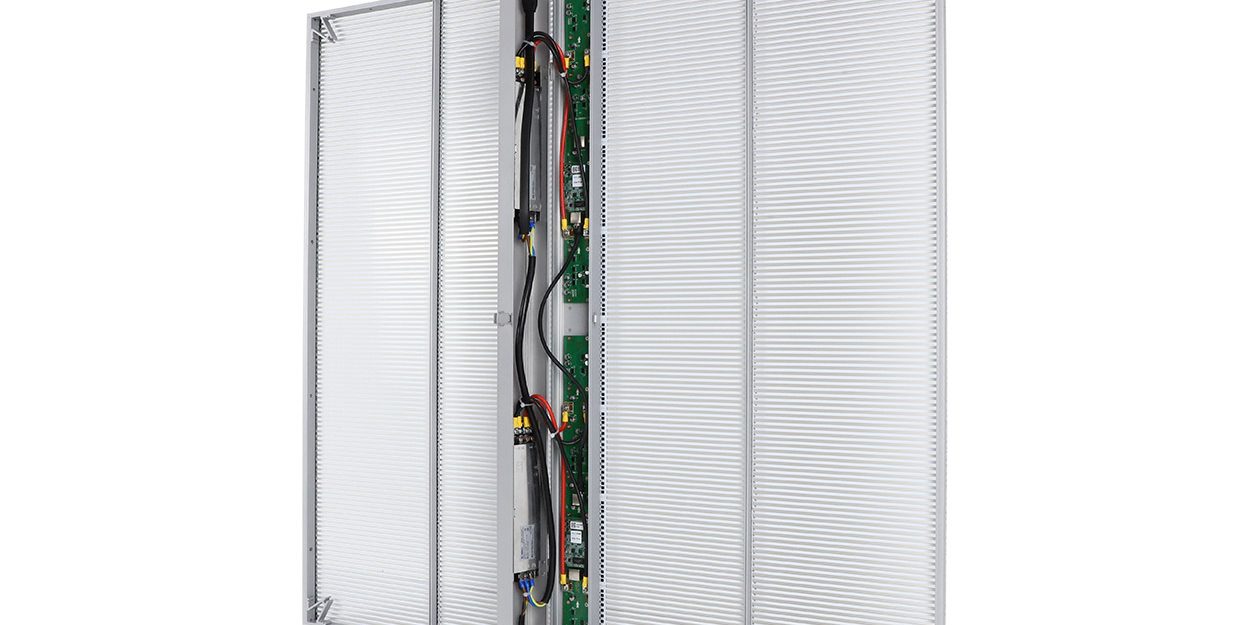
Give every supplier the same dated test sequence. First inspect the unlit screen: LED strips, frames, cables and power enclosures still obstruct parts of the view. Then play the main campaign, a restrained logo layout with unlit areas and the smallest essential message. Review the whole loop rather than a single flattering still.
Ask the visual-merchandising team to record what must remain visible: the product silhouette, identifying details, a highlighted surface or an unobstructed display zone. Use these as agreed review points. A suggested acceptance statement is: “The nominated reviewer must be able to identify the marked product details from the agreed approach positions during the complete approved campaign loop.”
Repeat under representative daytime and evening conditions. Record glass, background lighting, screen setting, content file, viewing position and reviewer. If the full site cannot be reproduced, label what differs and decide which points still need an on-site trial. Camera recordings support the record but have exposure and compression limits.
3. Reconcile the cabinet grid with the window design
EA1000TiF2 is a fixed indoor cabinet system, with published 1000 × 1000 mm and optional 1000 × 500 mm formats. These are physical cabinet options, not permission to cut a rigid cabinet to fit decorative joinery. Ask for an elevation showing the entire assembly, its supports and service zones.

Mark mullions, opening panels, doors, cleaning access and the merchandise footprint. Identify where frames or power enclosures cross important sightlines. Provide the finished trim details and routes for power and data, including what a visitor sees from the pavement and from inside the store.
A cabinet screen, an adhesive film and an integrated glazing system have different installation and replacement methods. If a supplier proposes a different construction, review it as a different system. Our LED film supplier evidence guide addresses attachment and glazing questions specific to film.
4. Demonstrate maintenance behind the finished display
The EA1000TiF2 product page describes rear-access maintenance through an openable cover. Have the supplier and installer show how that cover opens, how the relevant component is removed and where the technician works after the window is dressed. A product photograph cannot establish the required clearance.

Agree who moves display items, provides access and restores the window after repair. Have trained personnel demonstrate the manufacturer’s replacement procedure using the proposed spare, with appropriate isolation and handling. Confirm the restored picture and the saved configuration. Do not assume an identically sized module from another revision is interchangeable.
Assess the actual indoor position, including sunlight through the glazing, ventilation and condensation conditions. An indoor cabinet facing the street remains an indoor product. For exposed equipment, obtain a suitable outdoor proposal instead of relying on the shop window’s appearance.
5. Connect factory evidence to the quoted system
Confirm the commercial entity, manufacturing or supply role, component schedule and substitution process. Ask for applicable model-specific documents and written service responsibilities. Use the manufacturer audit checklist for broader company qualification; the mock-up establishes the narrower retail-design decision.
Viewing points: observe the physical strips and the changing illuminated image in this official @EagerLED production clip, labeled EA1000TiF2-P5.6 for Mexico. That label is different from the current table’s model columns above. Use the clip to discuss construction and demonstration methods; do not use it to assign specifications to a different variant or to approve a luxury retail installation.
Retain an approval packet containing the exact configuration, mock-up record, window elevation, component access method, content settings, spare identities and unresolved issues. An approved sample is most useful when the order states how supplied units must match it.
6. Request a window-specific proposal
Send EagerLED the destination city, window elevation, glass details, installation photographs, merchandise layout, lighting conditions, outside viewing positions and original campaign files. Ask which configuration is proposed, which sample tests can be arranged and how maintenance will work within the finished display.
Discuss your luxury window display brief
Confirm availability, exact specifications, sample arrangements and local installation responsibilities for the actual project.
7. Luxury window supplier FAQ
Does every EA1000TiF2 configuration have 60% transparency?
No. The product-page table checked on 20 October 2026 lists 45% for P2.6, 48% for P2.8 and 60% for the P3.91 and P7.82 columns. Verify the exact configuration and measurement definition in the current order documents.
Can I combine the finest pitch with the highest family brightness?
Only if the manufacturer documents that combination for the exact ordered model. Compare complete configuration columns; do not assemble a specification from unrelated headline maxima.
What should a luxury window mock-up include?
Use representative glass, lighting, merchandise, background and the complete campaign loop. Inspect the unlit structure and illuminated content from the agreed outside positions, and record the conditions and unresolved differences.
Does rear service mean the cabinet can sit against a display backing?
Not automatically. Confirm cover movement, tools, cable reach and component removal within the finished window. Keep the demonstrated access route clear of permanent joinery and merchandise.
Can a production video approve the store’s visual result?
No. It can show construction and operation under its recorded conditions. The store’s approval needs the proposed configuration, representative window conditions and the buyer’s agreed visual-merchandising criteria.
Product table, illustrations and official-channel video checked 20 October 2026. This guide provides a supplier-review procedure and model-specific references, not an independent product test or a guarantee of installed optical performance.