

Technical review: EagerLED Engineering Team | Updated: August 31, 2026 | Specifications were checked against the linked standards summaries and public product pages on this date.
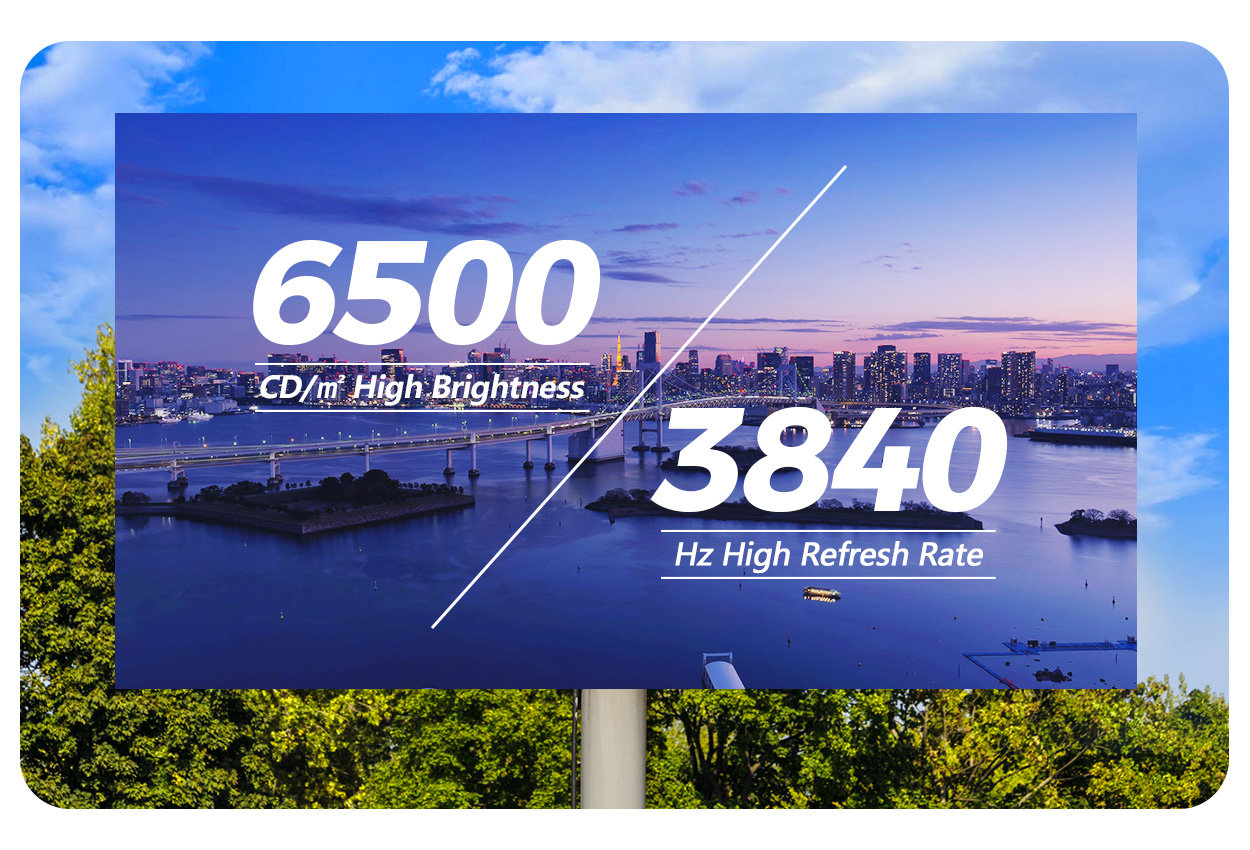
Outdoor LED display technology is the complete engineering stack that keeps a direct-view LED screen readable, stable, weather-resistant and serviceable outside. It is not one component. A reliable system combines LED packaging and pixel pitch, high-luminance optical design with automatic dimming, an enclosure tested to IEC 60529, thermal management, protected power and data distribution, video processing, calibration, monitoring and planned maintenance access. As a model-specific reference, EagerLED’s EA1000F2 publishes 5,000 or 6,500 cd/m2 brightness, a refresh rate of at least 3,840 Hz, IP65 protection, 16-bit grayscale and a -20°C to +60°C operating range. These figures are examples, not universal requirements.
Key takeaways
- Specify the screen as a system: optics, enclosure, cooling, structure, power, data and service access must work together.
- Do not call an IP65 screen “completely waterproof.” The rating applies to a tested enclosure and does not mean the display can be submerged.
- Brightness, pixel pitch and refresh rate should follow the site, closest viewer, camera use, content and local luminance rules.
- ISO 9001 describes a quality management system. It does not replace product-level test records or prove that a screen meets a performance specification.
- Ask for configuration-specific drawings, test reports, calibration files, spare parts and an acceptance checklist before shipment.
This page explains the engineering systems behind high-technology outdoor LED screens. For screen types, applications, costs and buying decisions, use EagerLED’s LED outdoor display buyer’s guide.
Table of contents
- How the technology works as one system
- LED packaging and pixel pitch
- Brightness, contrast and optical control
- Weatherproof enclosure engineering
- Thermal management
- Power, data and redundancy
- Video processing, refresh rate and grayscale
- Calibration and remote monitoring
- Cabinet, structure and maintenance access
- Quality control, aging and acceptance testing
- Published EagerLED model examples
- Engineering specification checklist
- Frequently asked questions
How outdoor LED display technology works as one system
An outdoor LED display receives a video signal, maps it through a controller to receiving cards and driver ICs, and modulates red, green and blue LEDs in each pixel. The visible image depends on more than resolution. Optical output must overcome ambient light without creating excessive night-time luminance; the enclosure must keep dust and water away from electronics; the cooling path must keep components inside their specified temperature range; and the support structure must hold aligned cabinets under the site’s design loads.
| Engineering system | What it controls | Evidence to request |
|---|---|---|
| LED package and pixel pitch | Image detail, optical efficiency, viewing distance and repair method | Package type, pitch, module resolution and sample viewing test |
| Brightness and optics | Daylight readability, contrast, power use and light impact | Calibrated luminance, sensor and dimming range |
| Enclosure | Dust and liquid ingress, corrosion and drainage | Declared IP rating, test configuration and front/rear coverage |
| Thermal system | LED, driver IC and power-supply temperature | Operating range, heat path, fan plan and alarm thresholds |
| Power and data | Stable operation, failover and fault isolation | Load diagram, cable schedule, redundancy design and monitoring map |
| Processing and calibration | Motion, camera compatibility, grayscale and color uniformity | Refresh-rate test, grayscale setting and calibration data |
1. LED packaging and pixel pitch
The LED package produces the light; pixel pitch is the center-to-center spacing between adjacent pixels. A smaller pitch increases pixel density and can improve detail at a close distance, but it also changes cost, thermal density, module resolution and service requirements. Select pitch from the closest real viewer and the smallest critical content, then verify the choice with a full-scale sample rather than using one universal distance formula.
| Technology | Construction | Typical engineering fit | What to verify |
|---|---|---|---|
| DIP | Separate through-hole red, green and blue lamps | Coarser-pitch, long-distance outdoor displays | Color mixing, viewing angle, service method and actual luminance |
| Outdoor SMD | RGB dies in one surface-mounted package | Finer pitch and broad fixed or rental applications | Package sealing, contrast treatment, repairability and batch consistency |
| COB, GOB and lens-based designs | Different chip, protective-layer or optical approaches; the terms are not interchangeable | Projects needing higher protection, finer pitch or controlled light distribution | Independent test data, field repair process, optical uniformity and outdoor qualification |
AVIXA’s overview of chip-on-board LED is useful background, but a package label alone does not determine whether a product is suitable for an exposed outdoor site. The complete module and cabinet still need environmental, thermal and service validation.
2. Brightness, contrast and optical control
Outdoor brightness is measured in candela per square metre (cd/m2), also called nits. The correct value depends on orientation, shade, reflection, viewing distance, content, surrounding luminance and local rules. More brightness is not automatically better: excessive night output increases power use, reduces comfortable viewing and can breach local signage limits. Specify a light sensor, scheduled limits and smooth automatic dimming.
“High brightness helps combat glare, while adaptive brightness control can automatically adjust the display to reduce energy consumption and optimize visibility as lighting conditions change.”
Richard Slawsky, Samsung VXT, 2025
Model data should be treated as evidence, not as a universal target. For example, the EA1000F2 outdoor advertising LED screen lists 5,000 or 6,500 cd/m2, depending on configuration. Site commissioning should verify calibrated brightness and the day/night control profile.
3. Weatherproof enclosure engineering
IEC explains that ingress protection ratings grade an enclosure’s resistance to dust and liquids, while IEC 60529 defines the classification and test framework. In IP65, the first digit 6 is the highest dust-ingress tier; the second digit 5 is the declared liquid-ingress tier under the standard’s test conditions. It is commonly described as protection against water jets, not immersion.
A credible weatherproof design also addresses gaskets, module seams, connectors, cable entries, drainage, condensation, corrosion and service-door closure. Confirm whether the published rating applies to the front, rear or complete cabinet and whether it was tested in the exact assembled configuration. Never convert a component rating into a claim that the whole installed display is “completely waterproof.”
4. Thermal management
LEDs, driver ICs and power supplies all generate heat. A thermal design must move that heat through module substrates, cabinet surfaces, heat sinks or controlled airflow while keeping water and dust protection intact. Review maximum ambient temperature, solar loading, daily operating hours, brightness profile, fan service life and alarm thresholds together.
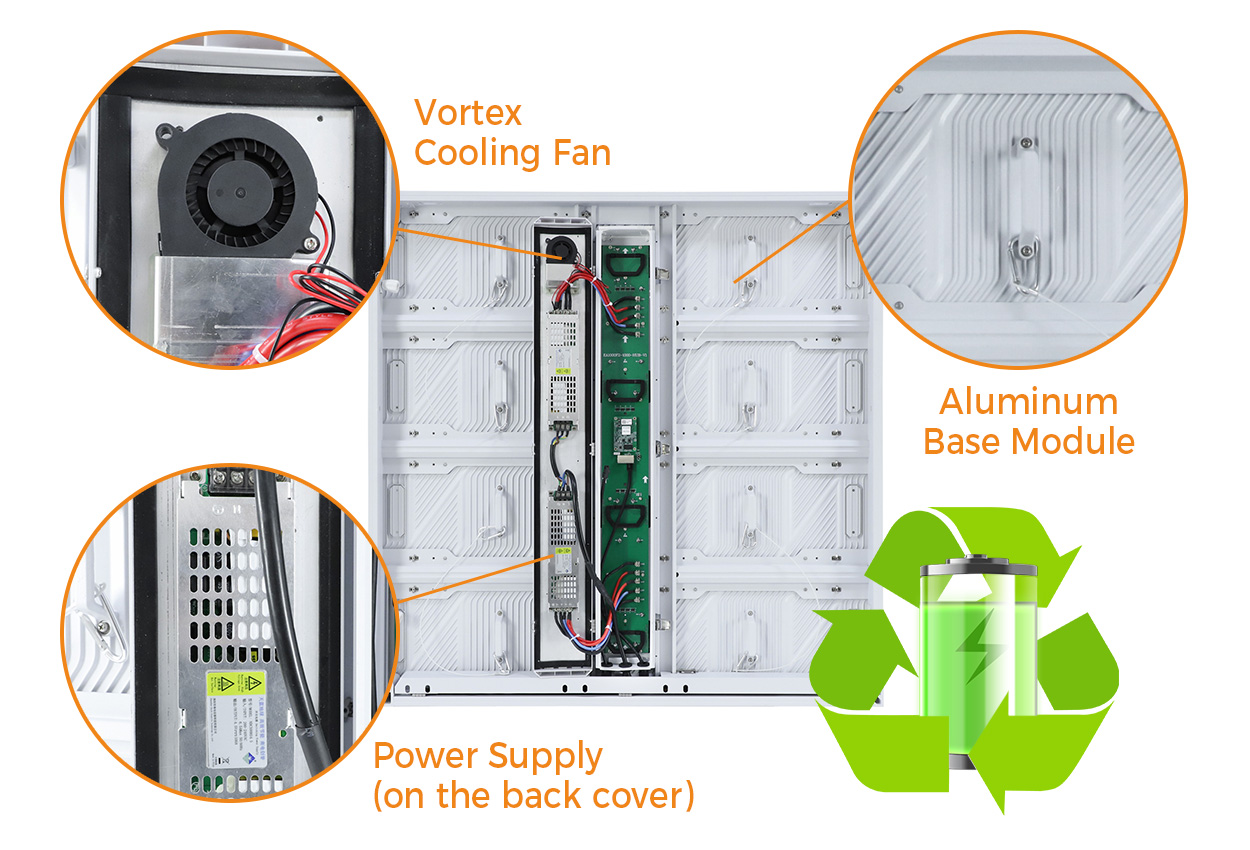
The EA1000F2, for example, uses aluminum module baseplates, vortex fans and a defined power-supply heat path. Its published configurations list a -20°C to +60°C working range. That range is product-specific; the project engineer still needs to consider enclosure location, direct sun, ventilation clearance and the worst operating case.
5. Power, data and redundancy
The power design begins with the selected configuration’s maximum and typical consumption, then divides loads so one fault does not darken an unnecessarily large area. The data design maps controllers, receiving cards and network paths to the cabinet layout. Critical installations may add redundant power supplies, dual signal paths or controller failover, but redundancy only works when the paths are genuinely independent and tested.
Load calculation, protective devices, grounding, surge protection and cable selection must follow local electrical rules and be completed by qualified professionals. AVIXA’s LED installation guidance specifically calls for load diagrams, technical datasheets and electrical configuration planning from the design stage.
6. Video processing, refresh rate and grayscale
The control chain includes the source, scaler or video processor, sending controller, receiving cards, driver ICs and scan configuration. Native screen resolution and controller capacity must be calculated before hardware is selected. A controller that is incompatible with the pixel load or signal format can create dropped frames, delay or image inconsistency.
Refresh rate is how often the LED-driving system updates the light output; it is not the same as the source frame rate. A high refresh rate can reduce scan-line artifacts when the screen is filmed, but the result also depends on shutter settings, scan ratio, brightness and driver configuration. EagerLED’s EA1000F2 and EA960F4 publish refresh rates of at least 3,840 Hz. Their grayscale specifications differ at 16-bit and 14-bit respectively, which is why every claim must be tied to a specific model and configuration.
7. Calibration and remote monitoring
Factory and on-site calibration align module brightness, white balance, color coordinates and grayscale response so the wall appears as one surface. Store calibration coefficients and backup configuration files with the project documentation; otherwise, a replacement module can be visibly brighter or a different color.
Remote monitoring should report useful conditions such as controller status, receiving-card communication, temperature, fan state and power alarms. Monitoring is not a substitute for maintenance, but it can shorten fault detection and help technicians arrive with the correct spare part.
8. Cabinet, structure and maintenance access
Cabinet material, alignment hardware, locks, safety tethers and front/rear service access affect installation accuracy and lifetime maintenance. Front service can reduce rear clearance; rear service may simplify access on a dedicated structure. The correct choice depends on the wall, billboard or temporary rig, not on a generic preference.
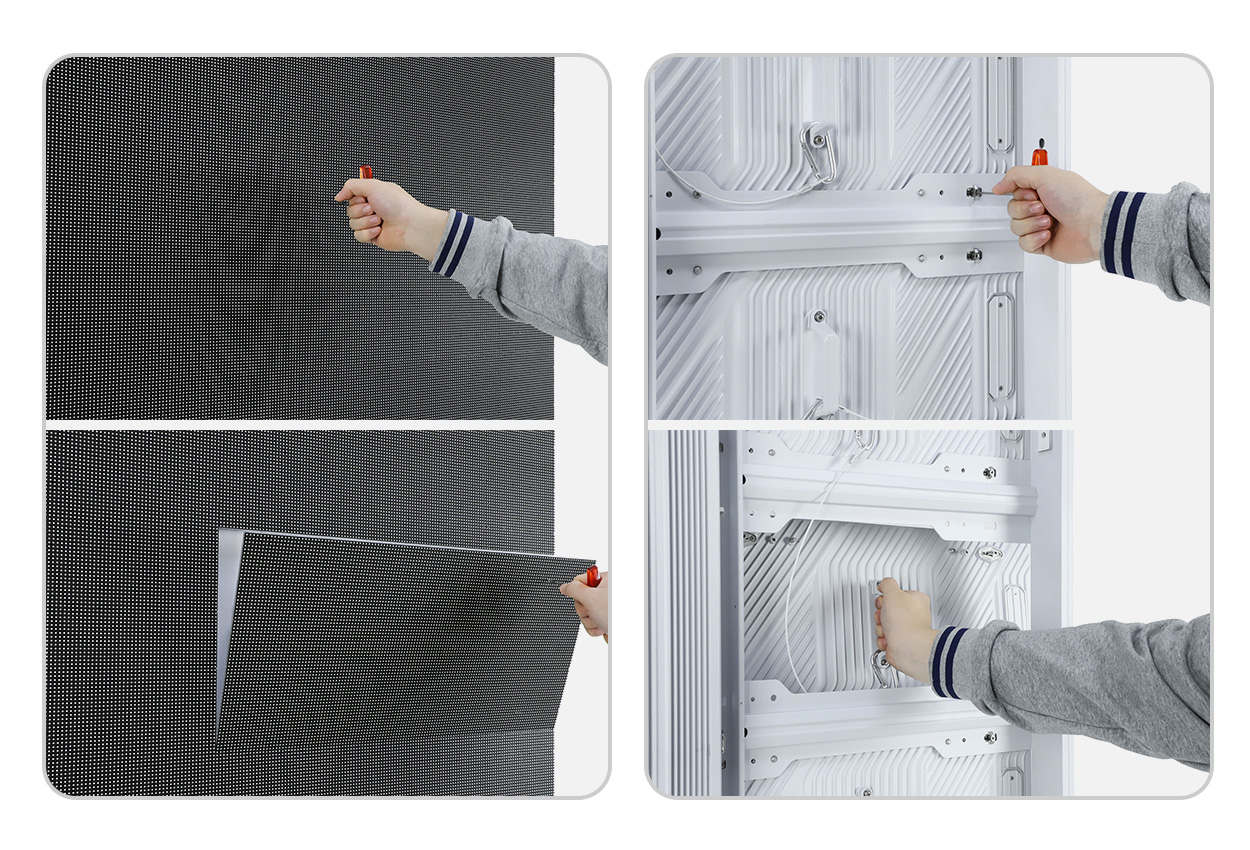
“This prior planning is key to avoiding on-site adjustments and ensuring a precise, safe, and efficient execution. We also recommend working with certified structures and performing load calculations in advance.”
Miguel Trujillo, BDM at StudioLED, quoted by AVIXA, 2026
A qualified structural engineer must design the support for site-specific wind, seismic, dead and maintenance loads under local rules. Request front views, sections, mounting details, service clearances and cabinet weights before fabrication. EagerLED’s LED display cabinet guide explains cabinet materials, service routes and quantity planning in more detail.
9. Quality control, aging and acceptance testing
The legacy version of this page referred to “ISO9001-2000.” That wording is obsolete. The official ISO page currently lists ISO 9001:2015 as the published quality management system standard and notes that a revision is under development. ISO 9001 evaluates organizational processes; it does not certify an individual LED screen’s brightness, IP rating or reliability.
Product evidence should include incoming inspection, module and cabinet checks, configured burn-in, color and brightness calibration, declared ingress testing, failover checks and a final visual inspection. EagerLED’s rental LED display page publishes a three-day (72-hour) whole-screen aging stage. For a real order, the QA file should still identify the model, batch, test conditions, dates and pass/fail results. A duration without a recorded procedure is not enough.
Published EagerLED outdoor model examples
The following values show how specifications change between product families. They are not a universal outdoor LED standard. Confirm the current table for the exact pixel pitch, cabinet and electrical configuration before ordering.
| Published model | Pixel pitch | Brightness | Refresh / grayscale | Protection and range |
|---|---|---|---|---|
| EA1000F2 fixed outdoor | P2.97 to P10.42 | 5,000 or 6,500 cd/m2 | ≥3,840 Hz / 16-bit | IP65; -20°C to +60°C |
| EA960F4 fixed outdoor | P4.44 to P10 | 6,000 to 6,500 cd/m2 | ≥3,840 Hz / 14-bit | IP65; -20°C to +50°C |
| EA576H1 outdoor rental | See model table | See model table | 3,840 Hz; 140° viewing angle | Rental cabinet with front/rear service |
Outdoor LED display engineering specification checklist
- Site: installation type, orientation, closest viewer, ambient light, climate, service route and local permits.
- Image: physical dimensions, native resolution, pixel pitch, content detail, viewing angle and camera requirements.
- Optics: calibrated brightness, contrast treatment, light sensor and day/night dimming limits.
- Environment: declared IP rating, tested sides, seals, drainage, corrosion protection and condensation plan.
- Thermal: operating-temperature range, heat path, fans, filters, alarms and maintenance interval.
- Electrical: configuration-specific load, circuits, protection, grounding, surge plan and local-code review.
- Signal: controller capacity, receiving-card map, cable distances, backups and remote monitoring.
- Structure: cabinet weight, certified support, design loads, alignment and installation drawings.
- Service: front/rear access, spare modules, power supplies, receiving cards, calibration files and response plan.
- Acceptance: documented burn-in, luminance and uniformity checks, ingress evidence, failover test and final configuration backup.
Frequently asked questions
What is the key technology in an outdoor LED display?
The key technology is system integration: LED packaging and pixel pitch, optical output, an environmentally tested enclosure, heat management, stable power and data, video processing, calibration, monitoring, structure and service access. A strong value in one category cannot compensate for a weak enclosure, unsafe structure or poor thermal design.
Is an IP65 outdoor LED display waterproof?
IP65 should not be described as completely waterproof. It is an enclosure ingress-protection classification under IEC 60529 test conditions. It does not mean the screen can be submerged, and the declared rating may apply differently to the front, rear or complete cabinet. Verify the tested configuration and installation details.
How bright should an outdoor LED screen be?
There is no single brightness value for every site. Orientation, shade, reflected light, content, viewing distance and local rules all matter. As product examples, EagerLED’s EA1000F2 lists 5,000 or 6,500 cd/m2, while the EA960F4 lists 6,000 to 6,500 cd/m2. Commission the final screen with automatic day/night control.
Is a 3,840 Hz refresh rate necessary?
A refresh rate of 3,840 Hz is useful when a screen will be filmed or must minimize visible scan artifacts, but it is not the only factor. Source frame rate, shutter speed, scan ratio, driver IC, grayscale and brightness settings also affect camera results. Test the complete signal chain.
How long should an outdoor LED display aging test run?
There is no useful universal duration without defined test conditions. EagerLED publishes a 72-hour whole-screen aging stage for its rental display line, but buyers should also request the procedure, model and batch identification, operating load, fault record and pass/fail result.
Sources and methodology
- International Electrotechnical Commission: Ingress Protection ratings
- IEC 60529: Degrees of protection provided by enclosures
- ISO 9001:2015 Quality management systems – Requirements
- AVIXA: 8 Essential Tips for a Successful LED Display Installation
- Samsung VXT: LED Outdoor Signage – What to Consider
- EagerLED public specifications for the EA1000F2, EA960F4 and EA576H1
Need a configuration review? Send EagerLED the site, screen size, closest viewing distance, application, installation type and expected operating environment. The engineering team can map those requirements to an appropriate outdoor fixed or rental LED display.